



















Legal executives, paralegals and trainees in particular know how much is at stake
Has there been a case in recent memory with more at stake for the legal profession than Mazur? A case that not only drills down into the details of legal services regulation, but one that could also: decide the futures of thousands of legal executives, paralegals and trainee solicitors; reshape the law firm business model; and ultimately decide who receives access to justice.
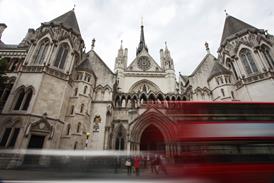
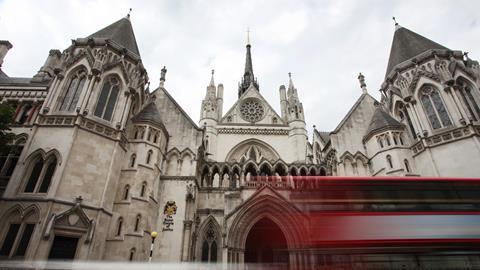
The army of lawyers who will shuffle into the Court of Appeal over three days next week gives a sense of what is at stake. Broadly speaking, the Solicitors Regulation Authority, Law Society, Legal Services Board and Julia Mazur herself – whose costs case prompted this saga – will argue that Mr Justice Sheldon was right to conclude that only authorised individuals can conduct litigation.
CILEX, the Association of Personal Injury Lawyers and the Law Centres Network are ranged on the other side. They will argue that the ruling was incorrect, either on the basis that it wrongly interpreted the Legal Services Act, failed to take account of other related cases or did not address the issue of access to justice.
Firms have encountered multiple issues arising from Mazur. Many had built business models that relied on non-authorised staff conducting litigation under supervision. The costs regime had developed to take account of this reality, with courts and clients content for lower-grade fee-earners to do much of the work and keep costs at a manageable level. Firms have been obliged to have difficult conversations with clients, telling them on the one hand that litigation is being paused because of the possibility it had been running unlawfully, while also warning them that costs might have to rise.
Unauthorised staff who had been conducting litigation for years have had caseloads taken away, with responsibility heaped on to solicitors, regardless of experience. There have been reports of redundancies, where it no longer made economic sense to employ people who were no longer authorised.
'If the appeal fails you could see a chilling effect where firms become ultra-cautious, limiting personnel involved and harming the next generation’s development. The outcome could either unlock opportunity or slam the door'
Ashley Barwick, chartered legal executive
Those affected have talked about feeling excluded or less valued, and having to stress the distinction between ‘unauthorised’ and ‘unqualified’. Snobbery and condescension towards legal executives – which many thought had been consigned to history – has threatened to re-emerge. The Legal Services Act was supposed to be about liberalising the market, but Mazur has felt to many like opportunities being cut off.
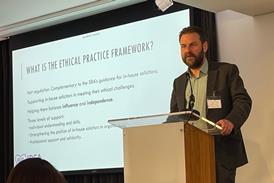
Ashley Barwick, a chartered legal executive for almost 25 years, said the outcome could make or break the legal careers of his peers.
‘Law firms depend on these team members to keep cases moving but they can’t expose themselves or their clients to regulatory risk,’ he said. ‘If the appeal fails you could see a chilling effect where firms become ultra-cautious, limiting personnel involved and ironically harming the next generation’s development. The appeal’s outcome could either unlock opportunity or slam the door.
‘If you are a legal executive, a paralegal or a trainee, the outcome here could define your future. Will your pathway be open or will it narrow to a bottleneck?’
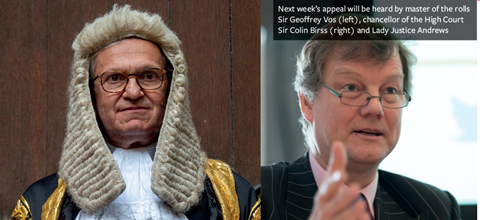
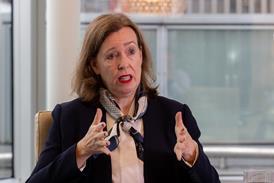
Julie Bishop, chief executive of the Law Centres Network, said not-for-profit providers need clarity amid concerns that they would not be able to operate under the post-Mazur regulatory framework.
‘Without clarity, there is a real risk that people facing eviction, loss of income or discrimination will find it harder to access legal help, not because their case lacks merit but because of how regulation is interpreted in practice,’ Bishop added. ‘We need a definition of “conduct” that is proportionate, workable, and grounded in the public interest.’
One of the biggest concerns has been the costs implications. The case itself was an attempt to avoid paying a bill on the basis the lawyers handling Mazur’s matter had not been authorised. Depending on the outcome at the Court of Appeal, costs estimates may have to be torn up and clients informed their bill has just increased because the work requires an authorised individual.
Paul Reason, managing director of Cambridgeshire-based R Costings, said: ‘The hearing will finally bring some greater clarity to law firms, which is much needed in order to distinguish between conduct and assistance. However, if the court’s original decision stands, then the whole industry will be in disarray – access to justice will be lost, cases will not be taken on by solicitors and entire law firm departments will be forced to close.’
The Court of Appeal hearing will be livestreamed from Monday afternoon. It will be uncomfortable viewing for law firms across England and Wales.













6 Readers' comments