






















The low down
The government’s SEND reforms landed badly with many families, lawyers and campaigners earlier this year. In 2025 the Gazette revealed plans to ‘hobble’ the SEND Tribunal’s jurisdiction and powers. There was a furious response from DfE. Yet the consultation contained just such proposals. In fact, SEND law and policy experts have now picked up on 20 legal rights threatened by the reforms. A promised increase in funds for SEND is nevertheless welcome. But is the money conditional on thousands of children losing rights available through education, health and care plans, and being forced into mainstream settings where they will be handed pre-determined packages? DfE says it is listening and has re-engaged with the Gazette’s questions after a gap of 15 months.
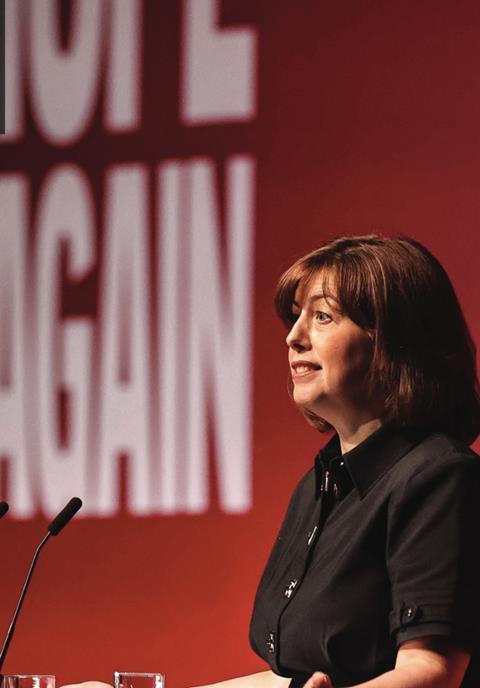
Secretary of state for education Lucy Powell MP is not actually changing her department’s name to ‘the Department for Hope’, as she styled the ministry in her speech to the Labour party conference. But in telling the Labour party faithful, ‘In many ways, I lead the Department of [sic] Hope’, she sought to strike a positive note.
To be fair to Powell’s speechwriter (which some online satirists declined to be), the conference’s single-word slogan is ‘Hope’; and Powell was seeking to match the upbeat tone of Andy Burnham’s premiership. ‘Our Labour values of opportunity for all, of a better life, of progress and advancement are channelled through our collective commitment to education,’ she said. ‘It’s the passport to success, to fulfilment, to life.’
What is not known is whether Powell shares her predecessor’s enthusiasm for special educational needs and disabilities (SEND) reforms in England, which include the removal of key legal rights for children and young people. These were set out in a Department for Education (DfE) white paper (‘Every Child Achieving and Thriving’) and accompanying consultation (‘SEND Reform: Putting Children and Young People First’, now closed); and a consultation on the future rights and provisions for children receiving education otherwise than in a school (which closed on 18 September).
A further consultation (also closed on 18 September) contemplated allowing local authorities (LAs) to transfer chunks of their high needs budget to individual mainstream schools.
Jigsaw identification
As Keir Starmer’s secretary of state for education, Bridget Phillipson MP invested huge personal capital in setting out and arguing for her SEND reform package. She stressed that ‘mainstream’ schools are the best expression of inclusion, and are therefore where efforts at improving education outcomes should be centred.
The proposals set out in SEND Reform: Putting Children and Young People First included plans that would replace legally enforceable education, health and care plans (EHCPs) with ‘individual support plans’ (ISPs) for all but children with the most ‘complex’ needs. Seven types of support packages, centrally developed, would define what children with special educational needs would receive. The matters on which the SEND Tribunal could rule would no longer include naming an educational setting, and cases eligible for referral to the Tribunal would be severely restricted.
Delivery of support to children with SEN in a mainstream setting would be through a training programme for mainstream teachers, though it is unclear whether the funds to support that are a one-off allocation; support from ‘experts at hand’; and the creation of ‘inclusion hubs’ in mainstream schools.
Phillipson’s keenness to promote reforms extended to eye-catching social media videos, and seemed to encompass selective briefing of the press. Cutting the cost of school transport and the use of private providers to meet EHCP commitments are key financial drivers.
To date, Powell has not associated
herself as closely or personally with the SEND law reform agenda. Is a different approach being attempted? One small sign of change is that DfE has provided answers to the Gazette’s questions for the first time since 11 June 2025.
But there is no evidence that this engagement is reflective of a change in course by DfE as a ministry.
The education other than at school (EOTAS) consultation, published in May, provided even more information on the ways the SEND Tribunal’s jurisdiction, powers and remit will be severely restricted. Proposals on EOTAS, which covers education and therapies delivered outside a school setting, contained in an EHCP, were absent from the original consultation.
If anything, this consultation is even clearer than the original on limits to be placed on the SEND Tribunal’s jurisdiction and remit for determining specific points on support provided.
As legal support charity IPSEA’s policy manager Catriona Moore points out in her policy blog on the reforms: ‘Parents would lose the right to challenge decisions about EOTIS through the SEND Tribunal, including whether a child or young person should receive EOTIS as well as decisions to reduce, amend or end their child’s provision.’ (EOTIS is the current acronym in law.)
‘The EOTIS consultation paper appears to clarify the government’s intention to remove the current right to appeal on how a child or young person’s needs are described in an EHC plan, as well as the special educational provision to meet those needs, which will potentially affect any child or young person with an EHC plan, not just those who require EOTIS. This represents a substantial shift in the balance of power between families and the education system,’ she adds.
Behind the scenes
‘There is almost a sense of bribery coming in too,’ Ed Duff, director of HCB Widdows Mason, alleges, ‘with the local authorities being offered 90% write-off [of their “SEND deficit”] if they produce SEND reform plans.’
The fear of some campaigners and SEND lawyers is that these plans, and the funds that attach to them, could be one way that DfE can begin to effect principles included in its reform proposals even before it has responded to consultation submissions, let alone published a bill or draft bill.
How so? Well, for example, if an LA’s plan is rejected because it allows for an increase in specialist school places that DfE deems to be unwarranted. Thus, given the waiting list for many special schools, it has the potential to become a tool for pushing SEN children into ‘mainstream’, a key plank of the reforms as set out by Phillipson.
‘LAs have even been advising that the reforms are massively problematic,’ Duff notes. That advice from LAs comes in the reports submitted by several councils, obtained by the Times Educational Supplement (TES), and they warn of ‘the danger that reforms are undermined by a lack of expert specialist staff, teacher burnout, a spike in demand for statutory support and families viewing the plans as cost-cutting measures’.
Plans are supposed to show, the TES notes, how local authorities ‘aim to turn the Department for Education’s aspirations for a more inclusive system into reality’. In light of which, Duff says: ‘This windfall [incentive] to change position is deeply cynical.’
This is a point the Gazette put to DfE. The department’s response is that it wants more pupils to access ‘the right support in a local mainstream setting – enabling them to learn alongside their peers and siblings, instead of travelling a long way to a special school’.
DfE says it has asked local authorities to ensure their capital investment plans align with a memorandum of understanding which ‘sets expectations that funding supports inclusion outcomes – including through inclusion bases to provide specialist places in mainstream settings’.
As a broad direction of travel, that would seem to confirm strong elements of Duff’s concerns. DfE counters: ‘Where DfE officials and advisers receive strong evidence of local need that cannot be met in mainstream settings, LAs can still invest capital in special school or [alternative provision] places for pupils with the most complex needs without funding being withheld… no LA will be forced into a position where they cannot meet their duty to provide sufficient places.’
Whether one calls it inducement or pressure, the memorandum of understanding supports the version of inclusion set out in the consultation paper, but the department is adamant that its position is not absolute on this point. A case for exceptions can be successfully made.
Legal challenge
There is a legal challenge to the lawfulness of the first consultation, sought in the name of a child with complex special needs. And as the Gazette has reported, a pre-action letter from specialist public law firm Rook Irwin Sweeney on 27 February elicited two letters from the Government Legal Department.
The first stated that the secretary of state was under no duty to consult on matters she had already decided, which included restrictions on jurisdiction and powers of the Tribunal. The second reversed that position, stating that everything was up for consultation. In the absence of a consultation question on the Tribunal, anyone responding was urged to add their views under a catch-all question box.
No backchat?
DfE had shown a generally low tolerance for critical voices. While ministers and officials have stressed they are listening, briefings to their own MPs have not supported that line.
As the Gazette reported in March, Labour MPs have received suggestions on what the secretary of state would like to hear in their letters to the education secretary after meeting constituents on the topic of SEND reform. MPs should tell her there was ‘relief’ from parents that the government is committed to strengthening support rather than taking it away.
Parents and campaigners have complained throughout the process that reasonable comments sceptical of, or opposed to, the reforms were deleted from social media content posted by DfE and MPs, even though such posts aimed at ‘engagement’.
Perhaps that is part of the rough and tumble of social media on all sides. But more sinister developments have been alleged.
On 22 June, Liberal Democrat education spokesperson Munira Wilson MP asked an oral question in the Commons. ‘First, we heard that ministers were trying to rig the SEND consultation with pre-written responses,’ she said. ‘Now it has emerged that the Department for Education-funded charity Contact, which supports local parent carer forums, has issued guidance stating that parents may be blocked from these groups if they dare to publicly criticise government policy. Why are ministers so determined once again to stifle any criticism of their reforms by silencing the very families whose opinions matter the most? Will the minister ensure that this outrageous guidance is reversed?’
Schools minister Georgia Gould MP sidestepped the question as it related to Contact. Her reply – ‘That is just not true’ – could refer to the penultimate, rather than the final, question put by Wilson. Gould avoided any mention of the conditions placed on or by Contact, simply stating: ‘In considering this issue, I have spent time with MPs from across the House and the families that they represent… We have talked to families from all parts of the country with very strong views, and we are continuing to do that as part of our consultation.’
The document, on Contact’s website, has an unambiguous title, on its face: ‘Parent Carer Forums and campaigning or Lobbying Activity.’ Its summary reads: ‘Before engaging with campaigning or lobbying groups, PCFs should consider… DfE grant conditions and any other funding requirements.’
DfE now tells the Gazette: ‘It is incorrect to suggest that the guidance is intended to silence parents or prevent parent carers from expressing views. This guidance applies to Parent Carer Forums as organisations and not to individual parent carers [acting in their own capacity].’
Contact’s updated guidance, DfE insists, ‘is intended to support PCFs to continue their role effectively, transparently and in line with longstanding grant requirements’.
Yet DfE’s response does add: ‘PCFs need to be able to build trust with all parties, including local authorities, schools and all parents in their communities who may have had different experiences or hold different views. Being seen to actively represent a campaigning organisation that could bring a PCF leader [emphasis added] into conflict with any of those groups would undermine their ability to form those trusted relationships.’
Waiting game
A calmer approach is emanating from DfE under the current secretary of state. Phillipson rarely looked especially comfortable in the videos she recorded, and the use of a reality TV star to promote the reforms, at a time when searching questions went unanswered, landed badly with parents who had detailed concerns about aspects of the reforms.
All must now wait for DfE to respond to the consultation submissions, and to see if what follows is publication of a fully formed bill, or a draft bill that carries an opportunity for pre-legislative scrutiny. An application for judicial review of the first consultation’s lawfulness is also awaited.
The concern that attached to the EOTAS consultation– that it confirms the loss of certain legal rights – remains part of DfE’s proposals. Notably, removal of the SEND Tribunal’s power to name the child or young person’s placement. Also at stake is the ability for parents to challenge what a school has decided to deliver under the ‘specialist packages’, as it is not envisioned that this provision can be challenged at the SEND Tribunal.
A DfE spokesperson says: ‘We are proud that our once-in-a-generation reforms, backed by £4bn, will ensure that every child gets the right support, in their local school, without having to fight for it.’
Some campaigners and SEND lawyers counter that taking away the ability to ‘fight’ does not need to be a precondition for ending the need to fight. Their argument is that legal rights boost accountability in a system where, given its current failings, trust in local authorities and many schools is threadbare.
Local authorities, DfE stresses, should be applying the law as it stands. But particularly close scrutiny currently attaches to their SEND reform plans, as an emphasis on ‘inclusion’ that equates to dependence on mainstream settings seems to bend the arc of practice towards the line of the proposed SEND law reforms.
‘We are,’ DfE’s spokesperson concludes, ‘now looking at the thousands of responses to our consultation and will continue to work closely with settings, local authorities and parents across the country to make sure everyone has confidence in the system we’re building.’
The next significant opportunity for parliamentary scrutiny of SEND law reforms may come before the publication of a bill or draft bill. A parliamentary petition (Protect legal right to support for children with SEND), started by 14-year-old campaigner Tee-Jay, which calls on the government to protect the legal right to support for children and young people with SEND, passed 100,000 signatures this week. That is the threshold for a parliamentary debate, to which a minister must respond.
Machine learning? Use of ai
The Department for Education consultation ‘SEND Reform: Putting Children and Young People First’ included a rider – that artificial intelligence tools would be used to read and analyse consultation submissions (which in the event arrived in the thousands). This is a relatively new feature of public policymaking, so the Gazette asked DfE for more detail on how AI operates in such a context.
The department replied:
• The government is clear that the public sector should be using approved AI technology to create efficiencies, ensuring value for money for taxpayers.
• We are committed to ensuring that every voice in this consultation is heard and carefully considered.
• Expert researchers are leading the consultation analysis, supported by AI to identify themes and patterns at scale.
• AI will not be used to create themes or analyse raw, identifiable consultation responses. It has a single, defined task – to measure the frequency of themes across anonymised responses.
• To protect the integrity of the consultation process, the AI tool we are using has been developed specifically for government consultation analysis and is subject to robust quality assurance.
• Manual review also ensures all AI outputs are checked and validated by human analysts.
• Details on the analysis process will be published with the final consultation response for transparency.








No comments yet