




















Over recent years, the legal profession has been compelled to reflect on what good leadership really looks like. Clients are more demanding, competition is fiercer, and expectations around culture, ethics and accountability have never been higher. In that environment, leadership is no longer just about technical excellence or commercial success; it is about how firms develop their people, build trust and create space for meaningful dialogue.

One of the most important and sometimes underestimated aspects of leadership is listening. Not just to peers or senior colleagues, but to those in the earlier stages of their careers. Junior lawyers sit at the sharp end of client delivery, experience our systems as they really operate, and often see challenges and opportunities long before they surface at leadership level.
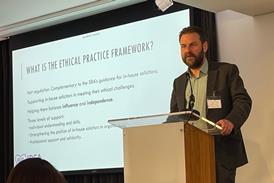
This has been reinforced for me personally over recent months. I’ve been travelling around our offices, holding open sessions where anyone could come along and ask me questions. There was no set agenda or hierarchy, just an opportunity for honest conversation and challenge.
I did not know exactly what to expect, but I was genuinely blown away by the thoughtfulness, maturity and confidence shown by some of our most junior colleagues. The questions weren’t superficial or self-serving. They were considered, commercially aware and often rooted in a real sense of responsibility to clients, colleagues and the wider role of law in society.
When I was starting out in a City law firm three decades ago, opportunities like that simply did not exist. Partners felt distant. Leadership decisions felt opaque. Junior lawyers learned by observing and keeping their heads down. You proved yourself through endurance, not engagement.
Yet a leadership mindset that shows listening matters – and starts from day one – shapes many of the practical choices we make as a firm. One small but visible example of this is how we recognise our trainees and junior lawyers.
A recent piece of legal sector research caught my eye because it highlighted how many firms still do not acknowledge trainees publicly (tinyurl.com/2ctabah4). No profiles, no names and little sense of who the next generation might be. Our approach is different, not because a website presence defines someone’s value, but because visibility is one way of signalling that junior lawyers are part of the conversation, not on its margins.
That decision is not about marketing optics or box-ticking. It reflects a broader belief in how law firms should think about talent, voice and leadership, particularly at a time when the profession is wrestling with questions of trust, inclusion and relevance, both internally and externally.
Today’s junior lawyers, often labelled (and sometimes maligned) as Gen Z, are different. Not less committed. Not less ambitious. Just different.
They are more willing to put themselves forward. More prepared to ask ‘why?’. More conscious of social impact, fairness and purpose. And, yes, sometimes more demanding of transparency, flexibility and balance. Rather than seeing this as a threat to traditional models of authority, as a profession, we need to recognise it as an opportunity.
Inviting junior voices into the conversation is not about flattening expertise or undermining leadership. It is about strengthening decision-making. Good leadership has never been about having all the answers; it is about creating the conditions in which the right questions are asked.
When people at all levels feel heard, engagement increases. Retention improves. Blind spots reduce. Cultural issues surface earlier, when they are still fixable. Innovation accelerates because ideas are not trapped at the bottom of the hierarchy.
From a leadership perspective, listening builds trust. And trust in any professional services business is currency. It underpins collaboration, resilience and credibility, both internally and with clients.
This is why visibility also matters. Recognising trainees and junior lawyers, whether on a website, in internal communications or in strategic conversations, sends a simple but powerful message: you belong here and you matter.
People who feel recognised are more likely to stay. More likely to care. And more likely to develop into thoughtful, responsible leaders when their time comes.
Future-proofing the profession means creating more opportunities to talk with the next generation, not just about them. Listening does not dilute authority. It deepens it.
If my recent experiences are anything to go by, the future of the profession is not something to fear; it is something worth investing in.
Louise Workman is CEO and a partner at Ashfords, Exeter





No comments yet