


















It has been fashionable to malign the Serious Fraud Office ever since the agency was founded almost 40 years ago. Successive SFO directors have routinely found themselves attacked in print and online – perhaps ‘par for the course’ due to the intense, results-driven nature of what they do.

Historically, some of that criticism has been justified. However, more recent history shows that in the past few years, the SFO scorecard has been rather better under its recently departed director, Nick Ephgrave.
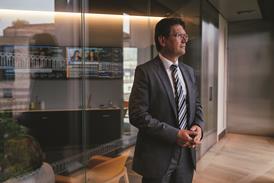
His regime may only have lasted two-and-a-half years, rather than the full five-year term, but the former assistant commissioner of the Metropolitan Police – the first non-lawyer appointed to the role – had a positive impact. Leaving Graham McNulty (another former senior Met officer) as interim director, Ephgrave has bequeathed an organisation that is potentially better placed to meet future challenges.
According to gov.uk: ‘Mr Ephgrave set out to redefine the ambition and scope of the SFO, overseeing a focus on proactivity, innovation and pace. This has included a sharper, faster casework approach, the use of artificial intelligence and machine-learning in support of improved disclosure practice and the creation of a crypto-asset capability.’
So, what stands out from the Ephgrave years? Bringing an outsider’s perspective with experience of managing a large organisation, this former chief constable of Surrey Police was able to identify problems and deal with them efficiently. He has – critically – prioritised faster case progression, introducing a case management system and influencing policy.
Having arrived in the wake of a series of high-profile failures and collapsed prosecutions (Serco, Unaoil, KBR, Tesco, LIBOR), Ephgrave brought about swift change. This centred on robust enforcement: quicker case timetables, greater operational activity, and a clear imperative to modernise the investigation and prosecution of complex cases.
At the outset, Ephgrave sensibly closed several long-running investigations which had drifted for years. Most notably, he dropped the decade-long bribery and corruption investigation into the Kazakh mining company, Eurasian Natural Resources Corporation.
From the outside looking in, it seemed clear that this case and other long-running investigations were not progressing towards either bringing charges or reaching a deferred prosecution agreement.
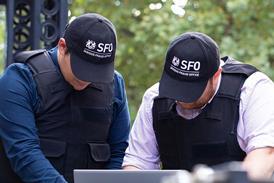
Ephgrave also revived aggressive dawn raids. He brought the press to a police raid on the first SFO case launched under his watch – Axiom Ince. The law firm ceased trading after the SRA intervened when £66m of client money was found to be missing.
In Ephgrave’s first few months, more dawn raids were conducted than in the previous three years combined. This will have positively boosted morale for SFO employees, demonstrating energy and direction from the new director. During his first year, SFO investigations resulted in 17 arrests and dawn raids in four of the six new investigations that were opened.
Reviewing the combined statistics under his stewardship, the SFO charged 23 defendants on 54 counts of fraud, bribery and corruption, and made 34 arrests. In total, there were five convictions.
Operationally, Ephgrave recognised that the SFO was judged to be largely passive, seemingly only reacting to cases that came its way. UK law does not yet permit the SFO to provide rewards to whistleblowers, although Ephgrave consistently advocated adopting the US model of incentivisation, calling the case for financial incentives ‘unanswerable’.
There has, however, been criticism. In particular, the SFO’s caseload under Ephgrave seemed to shift towards fraud affecting domestic victims rather than the previously more typical (and higher-profile) cases involving overseas bribery and corruption. Critics argue that such cases are smaller, lower-hanging fruit.
There are also, of course, the legacy issues arising from electronic disclosure failings. While the scale of these had to be teased out of the SFO by tenacious external lawyers, there should now be an opportunity to put programmes in place to tackle these issues. This can be an opportunity to clean out the Augean stables of technical failings and enable the SFO to look forward.
However, like many government agencies, the SFO is reportedly understaffed and underfunded, yet still expected to be a substantial net contributor to the Treasury.
When budgets are tight and resources finite, the SFO’s domestic focus on investigations demonstrates a clear link to British taxpayers. By prioritising UK victims of fraud – a phrase Ephgrave liked to use in speeches – he gave the SFO a clear sense of direction.
Perhaps Ephgrave’s intended legacy can be seen in the following extract from a 2024 speech: ‘The SFO has brought justice to tens of thousands of victims, and I’m not just talking about high-rolling City investors or blue-chip companies, I am talking about hard-working people who thought they were making safe and sensible investments to protect themselves in their old age, perhaps to look after their family, so they could live in some comfort after working for 40 years; these are the people the SFO is looking after.’
When appointed, the new director would perhaps do well to pay heed to these words, while building on Ephgrave’s good work – to use the rebuilt foundations to get the SFO back investigating the high-profile foreign bribery and corruption cases that undermine ‘UK plc’.
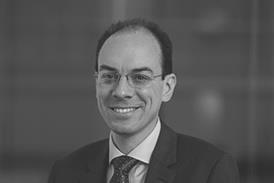
Chris Roberts is a partner and head of white collar crime and investigations at Grosvenor Law, London








No comments yet