




















Dogged by failed prosecutions, disclosure headaches and obsolete technology, the Serious Fraud Office continues to face an uncertain future despite recent improvements. Maria Shahid reports
The low down
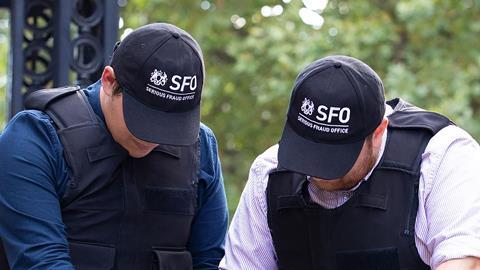
An effective Serious Fraud Office (SFO) is important for our financial security and the integrity of the markets. So the well regarded Nick Ephgrave’s premature departure as director was greeted with disappointment. The former police officer boosted morale and provided colleagues with a greater sense of purpose and direction. The agency completed more dawn raids in the first three months of his tenure than in the previous three years. His interim successor seems set on continuity, but the agency faces serious challenges. The volume of data its investigations demand has multiplied and outdated technology has led to damaging disclosure errors. Lawyers observe that the agency was entirely omitted from January’s policing white paper, which some interpret as ominous.
The role of the Serious Fraud Office (SFO) as a prosecutor of major cases has been called into question in recent years.
In February, the agency dropped its prosecution of three former executives over alleged bribery in Sierra Leone by London Mining. The decision followed years of investigation, with the outcome adding to criticism of the SFO’s handling of complex fraud cases. The agency also announced that it would review disclosure procedures across 20 cases after concerns emerged about failures to disclose relevant evidence to defence teams.

White-collar crime lawyers cite several reasons why the agency continues to struggle with investigations, from a lack of structure and strategy in investigations to the use of outdated technology. The length of time an SFO investigation can take is an ‘obvious problem’, says Ian Ryan, head of business crime and regulatory at Howard Kennedy.
Another, bigger challenge is the amount of data collated in the course of an investigation. Under the Criminal Procedure and Investigations Act 1996 (CPIA), prosecutors have a duty to disclose to the defence any material that may reasonably undermine the prosecution’s case or reasonably assist the defence’s case.
Between 2010 and 2017, the average volume of SFO cases grew from around 2m to 6m documents, with the largest live case on its system (as of January 2025) having roughly 48m.
‘There’s a mismatch between the volume of data collected by the SFO as part of its big economic crime investigations and the use of technology to support their review,’ says Simmons & Simmons partner Camilla de Silva. ‘It is using legacy review tools, and I think there’s an inconsistent use of tools, which is not helping.’
Partly, she believes, this is due to a lack of compliance strategy: ‘The SFO has for too long seen its disclosure obligation as a compliance exercise, rather than a strategy it needs to engage with right from the start of the case. At the moment, my impression is that the SFO is focusing on progressing the case in terms of evidence, with disclosure seen as a secondary issue. That is why some of these cases fall apart – they haven’t sufficiently strategised their disclosure approach at the start.’
Arguably, the disclosure legislation needs updating, says Chris Roberts of Grosvenor Law. ‘I wonder whether the SFO and other prosecutors have missed a trick by failing to persuade legislators about the complexities that come with disclosure obligations,’ he says. ‘We need to look at the rules and obligations placed on prosecutors in the world of 21st-century digital evidence, while making sure not to dilute the rights of defendants in revising those rules.’
Data-driven review
Christopher Houssemayne du Boulay, partner at Hickman & Rose, acted for separate defendants, both of whom were acquitted before trial, on the G4S and London Mining cases in 2023 and February this year, respectively.
In both cases, issues were discovered with how the SFO was using its disclosure software, Autonomy Introspect.
In the G4S case, the defence team discovered a problem in the original search term and filters used by the SFO to narrow down large volumes of material. This flaw meant that words followed by certain punctuation would only respond to search terms which included that punctuation. This led to vast volumes of relevant documents initially being missed. When the defence team was invited to propose its own search terms, these too initially suffered from the same glitch until the defect was exposed.
The same defence team, led by Hickman & Rose, discovered another problem with the way Autonomy Introspect was being used by the SFO in the London Mining case, involving zipped folders or ‘container files’ which were not processed. The SFO only notified the defence team at the end of 2025 that there were over 40 ‘container files’ which had not been processed, containing 600,000 items. The case against London Mining was eventually dropped in February this year.
The SFO announced a review of cases involving Autonomy in late 2025. A February 2026 update on its e-discovery review identified 66 historical conviction cases that used the legacy Autonomy system. These were being checked to see if there was any material to cast doubt on the convictions. A new review of the ‘container file issue’ is ongoing, and according to the SFO, it ‘may have affected approximately 20 cases’.
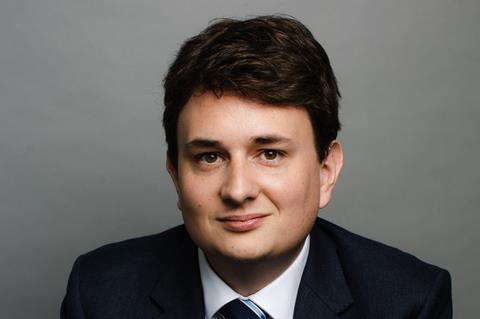
Houssemayne du Boulay believes that the SFO should be doing more ‘to ensure that there have not been any miscarriages of justice in those historical cases.
‘The most obvious thing it could do would be to rerun the search terms in a way which did not suffer from this defect,’ he says. ‘Although I’m not privy to everything that’s being done in these closed investigation reviews, in the ones that I’m aware of, the SFO has resisted rerunning search terms.’
An SFO spokesperson tells the Gazette: ‘Where we have needed to repeat searches as part of our post-conviction disclosure duties, the search terms have been updated to fix the punctuation issue. To date, we have found no new material which casts doubt upon the safety of any past conviction.’
The SFO replaced Autonomy software with OpenText’s Axcelerate for new matters from around 2018. However, defence lawyers say that even this AI-based tool is ‘light years behind’ what the private sector is using.
In a statement to the Gazette, the SFO confirms that it is progressing its use of AI to speed up and strengthen its work. This includes ‘the use of built-in technology-assisted review features on Axcelerate to make disclosure reviews more efficient at each stage of the process’.
Tough at the top
The last two SFO directors, while controversial choices as non-lawyers, have been keen to embrace technological advances in investigations.
In 2023, Nick Ephgrave became the first non-lawyer appointed to the position and is generally regarded as having moved the SFO in the right direction. ‘I think he did a really good job, he improved morale and gave the organisation a sense of direction and purpose,’ says Roberts (see Comment, p21).
Speaking to the Gazette in 2025, Ephgrave acknowledged that ‘disclosure is a huge burden’ and spoke of his plans ‘to roll out more technology-assisted review to more cases’.
In January Ephgrave stepped down, retiring halfway through his tenure. He was replaced by interim director Graham McNulty, the SFO’s chief operating officer.
McNulty is seen as a ‘continuity candidate’, say lawyers, and seems keen to continue the strategic direction set by Ephgrave. Following his April appointment, the agency published its 2026/27 business plan. Speaking at the Global Investigations Review Live: Annual Investigations Meeting, McNulty noted: ‘This plan makes clear our ambition and focus on our priorities, including intelligence-led investigations, innovative modern tools and effective disclosure.’
The agency also announced £8.3m of additional funding to ‘invest in proactive intelligence to intervene earlier and with greater precision’. The plan is to ‘deploy modern technology to make its operations more focused and effective’, including ‘exploring new AI opportunities’.
Houssemayne du Boulay, however, believes that the SFO should also be focusing on accountability with regard to technology. ‘The Forensic Science Regulator oversees this sort of activity, and since 2023, there has been a code of practice that has been mandatory for all organisations engaged in forensic science activities in criminal proceedings to comply with,’ he says. ‘The SFO is not in compliance with that code. It requires external accreditation [by the UK Accreditation Service (UKAS)], and it does not have that accreditation.’
An SFO spokesperson tells the Gazette that its new business plan ‘reflects our ongoing progress towards UKAS accreditation’. This accreditation, they add, is ‘site-specific and can only be finalised once we move into our new offices’.
ENRC saga a ‘damaging blow’
In April, Eurasian Natural Resources Corporation (ENRC) brought a claim against the SFO, Dechert and former Dechert partner Neil Gerrard, seeking $168m in damages linked to the SFO’s abandoned investigation into the company.
The claim relates to legal fees incurred by ENRC while defending itself during the investigation, as well as increased borrowing costs and reputational damage arising from the decade-long probe, which the SFO closed in 2023 without bringing charges.
The mining business had hired Dechert to conduct an internal investigation into whistleblowing allegations of bribery in 2011. The firm was eventually fired by the company in 2013. Communications between Gerrard and the SFO were the subject of long-running litigation. ENRC denied any allegations of wrongdoing and the criminal investigation was effectively dropped in 2023.
In 2023, the High Court found that the SFO was a ‘vital participant in the overall wrongdoing’ of Gerrard, whom it ‘actively encouraged’ in relation to an investigation into ENRC.
Ongoing proceedings deal with the quantum of damages.
‘The original liability judgment was obviously critical of the way that the SFO conducted its investigation,’ says Hickman & Rose partner Christopher Houssemayne du Boulay. ‘It’s a damaging blow.’
Lack of ambition?
'There does seem to be a lack of ambition in terms of the sorts of cases it is going after. The SFO should be looking at really difficult, cross-border, multi-jurisdictional, complex financial fraud and bribery. That’s what it’s there for'
Ian Ryan, Howard Kennedy
Shortly after Ephgrave’s departure, McNulty started investigations into three companies involved in home-insulation schemes, which are alleged to have defrauded energy companies under the ECO4 programme.
Important as such cases are, detractors believe that the SFO should be going after bigger fish. ‘If you compare some of the large companies and multi-million-pound international bribery allegations that the SFO was investigating historically, there seems to have been a scaling back of ambitions more recently,’ says Houssemayne du Boulay. ‘Its response to that criticism may be that we can only deal with the cases that come to us. That is obviously an answer in part, as it does essentially wait to receive intelligence, either from other law enforcement agencies or reports from companies.’
‘I have sympathy for the SFO in relation to the amount of material it has to deal with,’ says Ryan. ‘It also has resource issues. However, there does seem to be a lack of ambition in terms of the sorts of cases it is going after. The SFO should be looking at really difficult, cross-border, multi-jurisdictional, complex financial fraud and bribery. That’s really what it’s there for.’
Deferred prosecution agreements
US-style deferred prosecution agreements (DPAs) were introduced in the UK by the Crime and Courts Act 2013. DPAs allow companies accused of economic crimes to avoid prosecution if they admit wrongdoing, pay financial penalties and comply with certain conditions set by prosecutors and approved by a judge. The framework was intended to bring individual prosecutions, using corporate cooperation to secure evidence against the responsible executives.
Earlier this month, the High Court approved a DPA, following an SFO investigation opened in 2018 involving defence and aerospace company Ultra Electronics. This was the first DPA secured by the SFO in five years.
Ultra Electronics agreed to pay nearly £15m after acknowledging accountability for failure to prevent bribery.
‘To demonstrate the effectiveness of a tool, you do need to keep bringing it to people’s attention,’ says Roberts. ‘With the DPA, the way to do that is to agree them. After a flurry in the first couple of years after their introduction, they disappeared from the radar. They now seem to be back, which is a good thing from the SFO’s perspective.’
Subsequent court documents revealed that the SFO had ruled out prosecuting any individuals involved in the case. Critics argue that DPAs rarely result in successful prosecutions of senior executives or employees. Since the regime was introduced in 2014, the SFO has secured 13 DPAs; only one individual has been convicted.

What now?
In January, home secretary Shabana Mahmood announced major police reforms, including the formation of a National Police Service, which would merge with the National Crime Agency (NCA). Described as a ‘British FBI’, the aim is to centralise and consolidate investigations into terrorism, fraud and organised crime. However, the SFO is not mentioned in the white paper, leaving some questioning its continued existence.
The SFO was originally built on the Roskill Model, based on the 1986 Roskill Report into fraud trials; meaning that it investigates and prosecutes cases using a single multidisciplinary team. The aim was to allow large and complex fraud investigations to be managed more efficiently.
Questions remain as to whether a fraud agency set up to handle serious and complex fraud, bribery and corruption, and major corporate crime should be folded into a larger enforcement body. ‘The challenge regarding prosecuting and investigating serious crime being folded into the NCA is that you dilute the specialism and the expertise that is there,’ says de Silva.
'If the SFO is not considered a competent, effective prosecutor, then there is a disincentive for large companies to self-report'
Christopher Houssemayne du Boulay, Hickman & Rose
Against that backdrop, the SFO is naturally keen to highlight its recent successes: ‘This year alone has seen us secure significant convictions in two major international fraud cases, and earlier this month conclude our first deferred prosecution agreement since 2021, recovering £10m to taxpayers from a major British defence supplier,’ an SFO spokesperson says.
Ultimately, say lawyers, the SFO’s future success as a fraud prosecutor depends on how outsiders perceive its past performance, something Houssemayne du Boulay terms the ‘feedback cycle’.
‘If the SFO is not considered a competent, effective prosecutor, then there is a disincentive for large companies to self-report, because companies will calculate the negatives and positives of reporting misconduct,’ he explains. ‘If the consequence of self-reporting is that ultimately, in 10 years, they will enter into a DPA and pay several million pounds, and still have had a decade of investigation, it’s not hard to imagine how that really does create a disincentive to self-report.’
Maria Shahid is a freelance journalist








No comments yet