





















Product safety law is almost four decades old and ever more unsuited to a digital age, critics allege. Rachel Rothwell canvasses views on the case for a reboot
The low down
Product liability law covers a huge range of issues, from exploding vapes to defective knee implants. But the key legislation – the Consumer Protection Act 1987 – arguably needs updating for the digital age. The Law Commission announced a review of product liability law last year, but the UK already lags behind Europe, which published a new Product Liability Directive in 2024. Claimant lawyers insist that reform must be radical to deal with new technology. They argue that the way the CPA has been interpreted by the courts has left it too difficult to hold manufacturers to account for defective products. Claims often need to be directed at retailers or NHS trusts for a better chance of success. Defendant lawyers counter with arguments about the need to avoid stifling innovation.
Product liability law covers a huge range of issues, from exploding vapes to defective knee implants. But the key legislation – the Consumer Protection Act 1987 – arguably needs updating for the digital age. The Law Commission announced a review of product liability law last year, but the UK already lags behind Europe, which published a new Product Liability Directive in 2024. Claimant lawyers insist that reform must be radical to deal with new technology. They argue that the way the CPA has been interpreted by the courts has left it too difficult to hold manufacturers to account for defective products. Claims often need to be directed at retailers or NHS trusts for a better chance of success. Defendant lawyers counter with arguments about the need to avoid stifling innovation.
Exploding lithium batteries in e-scooters, faulty mountain bike frames, juicers that blow up in people’s faces, drugs with harmful side effects, knee implants and other medical devices that go wrong, fridges that catch fire, vapes that ignite in someone’s pocket, or simply a poorly made spoon that breaks to reveal a sharp edge – all these things can and do cross the desks of product liability lawyers, and all are covered by the key legislation protecting consumers from harmful products: the Consumer Protection Act (CPA) 1987. But that is nearly four decades ago and a relic of an analogue age. So last summer, the Law Commission announced that it would carry out a review of the current regime, sponsored by the Department for Business and Trade.
‘The world has changed quite a bit since 1987 in terms of new technologies, consumer habits, new ways of buying things and new markets,’ observes Emilie Civatte, partner at defendant firm Kennedys. ‘There is an argument that the regime needs to be brought up to date.’
David Myhill, a barrister at Crown Office Chambers who handles both claimant and defendant product liability claims, points out that the CPA was created long before the advent of mass computing. ‘It clearly needs tweaking to take into account the modern realities of things like AI and software,’ he suggests.
The UK is already falling behind the European Union. The CPA is based on the EU’s first Product Liability Directive, adopted in 1985. In 2024, however, the EU published a new directive governing product liability, which all member states must transpose into national law by 9 December this year. That new directive aims to bring Europe’s product liability laws into the digital age, address harms caused by new technologies, and generally make it easier for claimants to obtain redress for defective products. This opens up a yawning gap in the level of protection enjoyed by consumers in the EU compared with the UK.
Hard to win
How well is the CPA working today? On the defendant side, lawyers are generally satisfied. Barnaby Winckler, head of the product liability and life sciences team at Kennedys, reflects: ‘It’s a little bit odd on the face of it that the UK may be in the position that our statutory regime is old EU [law], and our neighbours in EU member states have moved on a bit. [But] after quite a lot of case law in the last 10 years, the current regime is relatively well understood. The legal test for no-fault liability under the CPA is now one where there is helpful high-level authority for complicated products like medical devices.’
On the other side of the divide, claimant lawyers are unhappy. Tim Annett, partner at Irwin Mitchell, says: ‘The whole point of the CPA was to try and introduce a more straightforward means of redress for consumers. I would say it hasn’t actually achieved that aim, because these cases are generally hugely complex – certainly anything involving medical devices or drugs. It’s not more straightforward than negligence; in many cases, it’s far more complex… Whenever they can, claimants will [tend to] pursue a claim for breach of contract against the retailer, instead of a CPA claim against the producer, because that’s usually a more straightforward case.’
For veteran claimant product liability lawyer Mark Harvey, partner at Hugh James, the problems lie in how courts have interpreted the CPA. He recalls: ‘My first ever case was in relation to a drug called Opren, which resolved in the mid- to late-1980s. I had this naive view that these cases were relatively straightforward… but then the courts rather put the boot in with the decisions in the hip implant cases [in 2017/18].’
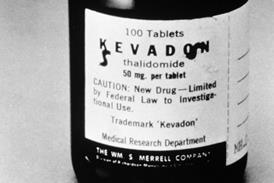
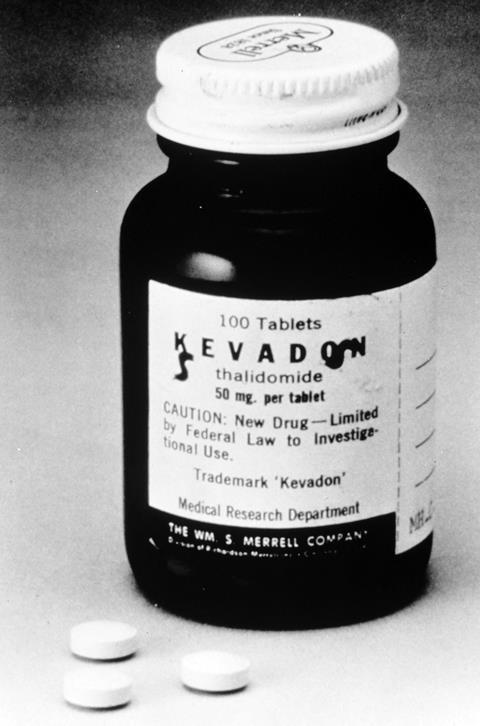
The 1985 Product Liability Directive that formed the basis of the CPA arose in the aftermath of litigation surrounding thalidomide, an anti-morning sickness drug that caused babies to be born with limb defects and other problems. Harvey explains: ‘It became clear that you could not very easily or successfully bring a negligence action arising out of thalidomide, so the EU wrote this directive that was supposed to remove the need to prove fault… and then in the blood products case [A v National Blood Authority [2001] Lloyd’s Rep Med 187], Mr Justice Burdon found in favour of the victims of contaminated blood.
‘He accepted that the blood service could not have done anything more than they did, but he applied what most of us [claimant lawyers] and the academics say was the proper application of the CPA, where he removed the requirement to prove fault. Obviously, the manufacturers, insurers and those who represented them never liked it and moaned about it for years.
‘Then we got the hip cases [DePuy Pinnacle Metal on Metal hip litigation] which went to the High Court. We bumped up against Mr Justice Hickinbottom, who put the boot in; very quickly followed by Mrs Justice Andrews [as she then was] who took over the Pinnacle cases from him and also put the boot in, and said that regulatory compliance was a huge hurdle. So she thought the fact that these products were already licensed was a very good reason why the court couldn’t come along and say these were defective products. She introduced [the concept of] risk/benefit and fault – and pretty much (we say) didn’t interpret the act as it should have been.’
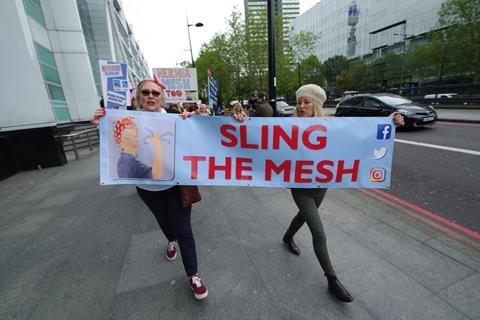
'Vaginal mesh was approved and it caused all sorts of harm, but with very little redress against the manufacturers'
Jill Paterson, Leigh Day
Harvey adds that where a product has not been produced as intended – a nail in your carton of milk, for example – the law works well. ‘You can obviously see that the product has gone wrong. It could be a contaminated process, or they’ve cooked it or designed it badly,’ he explains. ‘These cases don’t get to court; they resolve, confidentially or otherwise. The problem lies where the product is as the manufacturer intended it. The metal on metal hip implants are a good example of that. The manufacturer said these are exactly as we intended to make them, there are always going to be some people who will get a reaction to them. And these are the cases that our courts have made pretty much impossible to win.’
Jill Paterson, partner at Leigh Day and another claimant product liability stalwart, says: ‘Until [the hip implants ruling], manufacturers argued that whether a product had been given regulatory approval was an issue that needed to be factored into the equation, but we always argued that it didn’t, up until that point. But it’s quite clearly the position that weight is given to that now.
'It’s galling to think that the British taxpayer is paying for the remedy for companies that have very deep pockets'
Mark Harvey, Hugh James
‘The argument [from the defendant perspective] is that the regulators have seen all the confidential documentation that we would be looking to get, and so “there’s nothing to see here”, they’ve seen all of that. It’s a risk/benefit analysis that is taken into account as well… The difficulty is that then you have something like vaginal mesh, which is really a stain on the country’s system. That was approved and it caused all sorts of harm, but with very little redress against the manufacturers.’
Because claims against the companies that produce medical devices and pharmaceuticals are so hard to win, claims must often be directed at NHS trusts instead, for example on the basis that a patient did not give informed consent. ‘It’s galling to think that the British taxpayer is paying for the remedy for companies that have very deep pockets, [companies] that will have made a lot of money out of the British taxpayer from these drugs and devices, because they will have been bought by the NHS to distribute,’ remarks Harvey.
However, Winckler points out that a claim against the relevant clinician will sometimes be the most appropriate course of action. ‘Medical devices come with a risk profile,’ he says. ‘The advice and explanation given to a patient on whether to accept a course of treatment is obviously in the hands of the clinician. There may well be a very legitimate question as to what is the correct course to be pursued: [whether] a product is defective, or the decision to use it in connection with a particular patient with a particular clinical profile.’
The drugs don’t work
Paterson’s first product liability case was 2002 oral contraceptive pill litigation, brought on behalf of more than 100 women who suffered side-effects after taking third-generation contraceptive pills. The case failed because the women could not show they were more than twice as likely to develop venous thromboembolism as those taking second-generation pills, with the court requiring them to demonstrate a ‘doubling of the risk’. This is a threshold that the courts have since adopted in other pharmaceutical cases.
Paterson explains: ‘The question is, how do you prove on the balance of probabilities that it was the product [that caused the harm], over and above everything else? The argument is, if the relative risk is more than doubled (so it would have to be 2.1, not actually double), then that would show that the product was defective.
‘The difficulty is that you can have a clear set of scientific papers that are suggesting that the relative risk is something that is well above two – say, four or five. And then, as soon as it starts looking that way, suddenly, more studies start coming out that bring the risk down. It’s a difficult scenario because the tortfeasor is the one that holds all of the information. For a claimant litigator to get that information is difficult.
‘And defendant lawyers are trying to bring that increased risk [threshold] across the board in relation to other things; they use it a bit in clinical negligence cases as well. But I don’t feel it’s an objective measure. You’ve got the deep pockets of Big Pharma and the medical world, versus complainants trying to litigate. If that’s the way of proving the case, you need a lot of statistical evidence to back up your claim, and that costs a fortune… These are really difficult cases to bring.’
Winckler notes that some types of claim are inherently complex for both sides: ‘There is limited case law in pharmaceutical claims. The courts are also dealing with concepts of causation and material contribution and so on, which are difficult. This is the difficulty with anything that affects human health and the body. Part of the complexities of the calculation around risk and so on is that there are often trade-offs and competing considerations, because you’re dealing with people who are not well… There are difficult questions around all of these cases and they are not necessarily easy to bring, but I wouldn’t characterise them as being straightforward for either of the parties.’
European approach
What lessons could the UK learn from the new European Product Liability Directive? Plenty, according to Paterson: ‘Europe has done a really good job and I would bring that all in here.’
The directive expressly includes software such as computer programs and AI systems within the meaning of ‘product’. It also specifies that ‘harm’ includes medically recognised damage to psychological health. ‘A big problem with the law we’ve got now [in the UK] is that it’s just so out of date,’ says Paterson. ‘It’s ambiguous as to what it does and doesn’t cover, and the world has come on so far in terms of technological developments and robotic-assisted surgery, apps and things being involved in all sorts of ways. Also, with defendants in multiple jurisdictions, it’s difficult to trace the person responsible. So the EU tries to address that as well. You’ll never get anything perfect, because things are moving forward so quickly, but the aim of the EU directive is not to be too rigid; to be flexible enough to deal with future technology developments.’
More controversially, the directive also seeks to reverse the burden of proof through a rebuttable presumption that a defect or causal link exists in some circumstances, including where the product in question is highly technical or complex. ‘The directive has wording along the lines of, “if it’s the sort of injury that’s pretty obviously come from that product, there is a [rebuttable] presumption that that is the cause [of the injury]”. And they’ve left it to individual courts [in member states] to deal with causation,’ explains Harvey.

Myhill notes that while the way causation will work under the new directive is not yet clear, ‘it’s undoubtedly a more relaxed test than the current state of English law. There’s a case for considering whether to follow the European approach, or whether the European approach goes too far in favour of the claimant direction… There are certain circumstances where causation can be presumed in the new directive, and there’s a policy decision to be made here as to how far down that route you go.
‘The whole product liability regime is there to strike a balance… So it’s never been a part of the product liability regime that it should be too difficult to prove a defect, or too difficult to prove causation. But on the other side of the coin, it’s meant to ensure that innovation isn’t stifled because of the risk of litigation every time someone has an adverse outcome from using a product.’
Winckler says: ‘The rebuttable presumption would apply in some circumstances, particularly technically complicated cases. The exact interpretation of this and how it will work will depend on how it is transposed [by each member state] and then on case law, because it’s not unambiguous… The argument is that to ensure consumers will be compensated when bad things happen, you make it easier to sue the manufacturer of the product. [But] it’s always a trade-off and a set of balances.
‘Consumers benefit from new products being created here, and being created by people who cannot control their end use. So there’s always a degree of risk associated with any technology and new manufacturing processes, and the way in which that may then be deployed “in the wild”, so as to result in injury to people. If you were to go as far as to say there’s a presumption that there is something inherently unsatisfactory in the safety level of a product, merely because injury has occurred – and that could be where you get to – then that could be the wrong balance.’
Winckler points out that manufacturers have many other incentives to ensure products are safe: ‘In the western world, manufacturers operate not only in an environment where they could be sued, but also where they have to comply with different product safety regimes, and they also have every incentive not to harm their consumers. If they’re associated with selling products that are harmful, they’ll be destroyed as a business and their competitors will take their market share.
‘So there are a whole range of incentives… if you look at how proactively they go about making recalls, to avoid any possibility of causing harm, they’re doing that for a whole range of reasons. Someone bringing a claim against them down the line is usually not top of their mind.’

Out of time
The new EU directive also addresses what claimant lawyers see as a key injustice in the current law: the strict 10-year time limit for bringing product liability claims, contained in the first directive and adopted in the CPA. The new directive softens this by extending the period to 25 years in some circumstances, for example where a claimant’s symptoms are slow to emerge.
Irwin Mitchell’s Annett says: ‘One of the biggest difficulties with the CPA is the 10-year “longstop”. It’s a type of limitation period, but it works on a very strict basis. Usually, the court will have a degree of discretion [over limitation] if you can show you didn’t know you suffered an injury until a certain date, or you didn’t know certain things that the law requires you to know, the deadline doesn’t begin to run until then. But with a product liability claim, you have all the usual rules, plus this additional 10-year longstop rule, which starts when the product went into circulation. That’s something that the consumer or end-user probably doesn’t know, because it’s not, for example, when you bought something – it will be an earlier date than that. Or if it’s a medical device, it might be when it was supplied to the hospital, not when you had your operation. It’s something you can only find out by asking the producer or the manufacturer, in some cases.
‘It’s a strict 10-year date. Once that expires, your claim under the CPA is extinguished. The court has no discretion and it applies to everyone – children, those who lack capacity – in all circumstances. There’s no way around it, other than starting court proceedings before the end of the 10-year period. If you don’t do that, then your claim is gone.’
The 10-year longstop stemmed from negotiations surrounding the EU’s first directive and was intended to add balance for manufacturers. But Annett insists it should now be abolished: ‘Manufacturers have a degree of protection on the basis that as products get older, they may be subject to wear and tear, there may be other issues. And they could say, “that’s not our responsibility because you haven’t looked after the product, it needed to be serviced or maintained, and that’s why this happened”.’
However, Winckler believes that the EU’s proposed reform of the longstop, along with its proposals in relation to a rebuttable presumption in favour of claimants in some circumstances, would be ‘unwelcome, and potentially quite injurious to that balance of the risk between protecting innovation and enterprise, and trying to make litigation work for technically complicated cases.’
Class wars
In April, the Law Commission announced it was looking at another new project, examining the potential for a new class actions regime for ‘consumer claims’. This could potentially allow product liability claims to be brought on an opt-out basis for huge numbers of consumers. ‘I’m not so excited about that,’ remarks Harvey. ‘It doesn’t really matter if you give me a class action or a group action. If I can’t win the case with the law, it doesn’t matter how you fund it… But if you do improve the law, then the class action regime would bring a benefit, because you could do a representative action [where] you can bring a handful of cases, and the rest [of the class] will benefit from it. So I welcome it, but it’s not going to work for product liability until the underlying law is changed.’
Winckler has concerns, however. He points out that for product liability claims involving physical injury rather than financial loss, an ‘individual assessment’ of the injury should be needed. The defendant lawyer also points to lessons from the UK’s only current opt-out regime, in the Competition Appeal Tribunal. ‘Where we’ve seen this opt-out regime so far in the CAT, an awful lot of money has been spent on lawyers and very little paid to consumers… I’d be very slow to suggest we start expanding opt-out litigation in England and Wales,’ he says.
Looking ahead
Are we likely to see meaningful reform of product liability law soon? Harvey is pessimistic: ‘I retire in two years. I fear that when I do, the law will still be highly unsatisfactory – given that when I started in 1981, and in my first five years, I thought, gosh, isn’t it easy being a product liability lawyer, these cases just resolve. And I’ll think back at the end of my career and suspect I’ll be very disappointed that in our country it’s swung the other way, where it’s very difficult for victims of a faulty product to get what they’re entitled to.’
Paterson, however, points to other product safety developments that give cause for optimism. Last year the government brought in the Product Regulation and Metrology Act 2025 (PRAM), an ‘enabler’ act giving the government powers to make secondary legislation to tackle product safety problems. ‘At the moment, there’s a consultation about what the secondary legislation will look like,’ she explains. ‘So the Law Commission [review of] the CPA is at one end, after harm has been suffered; while the PRAM consultation is at the front end – how to regulate things getting onto the market in the first place.
‘We’ve had quite a lot of talk for the last five to 10 years about the problems with the law, and many cases, such as [vaginal] mesh, where it seems so unjust that there’s no real redress for people. But I’m optimistic that so much is being looked at at once, because the whole system really needs a total overhaul.
‘I’m glad they’re looking at both ends of it and taking it seriously. Let’s hope there’s real change.’
New harms froniter: Social media
Two landmark US rulings in March opened up a new frontier for product liability claims. It is understood that both cases are being appealed.
In PF et al (KGM) v Meta Platforms, Inc, a Los Angeles jury awarded a woman known as KGM $6m in damages, finding that Meta and YouTube had created addictive products that harmed her. KGM said she had become addicted to YouTube at six and Instagram at nine, leading to depression and self-harm. She was diagnosed with body dysmorphic disorder and social phobia, which she attributed to her use of Instagram and YouTube.
Meanwhile, in State of New Mexico v Meta Platforms, Inc, a jury in New Mexico ordered Meta to pay $375m in civil penalties after it found the company had misled consumers about the safety of its platforms and enabled harm, including child sexual exploitation, against its users.
Could similar claims be brought in the UK? ‘This is something we’re looking at closely, to see if successful claims could be brought here,’ says Leigh Day’s Jill Paterson. ‘The definition of harm itself is an issue, because some of this wouldn’t be recognised by the law [here] at the moment.’
‘As the law stands, I struggle to see that we would successfully bring cases such as the recent high-profile US cases about social media. There are great challenges,’ says Hugh James’s Mark Harvey. ‘The whole system is different in America – not just that they have juries awarding huge amounts of money. You have depositions, where you can put, for example, the owner of Facebook in front of a camera and interrogate them. Whereas in our system, you’re protected from giving evidence until you finally get to court, and of course if you don’t get to court, you don’t [have] to do it. Our law would make it very challenging to bring [these cases]. And while it would theoretically lend itself to a class action, the impact on each victim might be very different.’
Rachel Rothwell is a freelance journalist








No comments yet