



















In 1983 the concept of a coffee shop selling relatively expensive hot drinks in comfortable surroundings did not exist, according to the applicant in Farrell v Garforth-Bles and Bishop’s Mansions Ltd [2025] UKUT 00429. Did the creation of ‘latte culture’ mean that a restrictive covenant forbidding such a use was obsolete? Are public law developments in planning law relevant to the modification of restrictive covenants?

Section 84(1)(a) of the Law of Property Act 1925 gives the Upper Tribunal power to discharge or modify covenants which have become obsolete, whether as a result of a change in the character of the property or the neighbourhood or other circumstances which the tribunal deems material. Alternatively, if (a) the continued existence of the restrictive covenant impedes some reasonable use, without securing any practical benefit to the person with the benefit of the covenant, and (b) money would be adequate compensation, a similar order can be made under section 84(1)(aa).
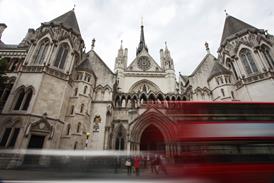
The applicant, Mr Farrell, had been party to the transfer imposing the restrictive covenant in 1983. He covenanted not to use the property other than for private residential or professional offices and separately not for various undesirable uses. Undesirable uses included retail, restaurant, snack bar or noisy trades. The covenant benefitted a series of adjacent mansion blocks of flats known as Bishop’s Mansions (pictured), which sports fans might recognise in the background to the start of the Oxford and Cambridge Boat Race. For many years, the property had been let to an estate agent on the ground floor with residential use on the first floor, but the commercial tenancy came to an end, and the ground floor had been vacant for at least two years.
In the 41 years since the restrictive covenant was created, the categorisation of use for planning purposes has changed significantly. Farrell had obtained an established use certificate under planning law in relation to the ground floor as Class A1 (retail) in 1991. Since then, changes in public law regulation of uses through the planning system permit still more flexibility. Was the new Use Class E a ‘material circumstance’ such that the tribunal could find that the restrictive covenant had become obsolete?
The tribunal held that the original purpose of the covenant was to ensure the use to which the property was put was compatible with neighbouring residential uses. Bishop’s Mansions had been developed at the turn of the 20th century in an affluent London suburb, which had since become a conservation area. Nothing about the property, the benefiting land or the neighbouring area had changed to the extent that the original purpose of the covenant could not be satisfied. In addition, the tribunal did not consider that the changes to planning regulations made it harder to fulfil the purpose of the covenant or rendered the covenant’s preservation less important. These factors mean that the covenant was not obsolete; changes in public law do not automatically flow through to private documents.
Turning to the alternative ground, the retail use of the ground floor was clearly reasonable, both in the context of planning permission and the context of the surrounding areas. The property is in an area and, in particular, a road where retail and other non-residential uses are interspersed with domestic dwellings. This reasonable use was prevented by the restrictive covenant and Farrell had made out the first part of the test in section 84(1)(aa). In the context of a busy road with nearby coffee shops, would one more cafe make a practical difference to the residents of Bishop’s Mansions? Farrell’s property had a rear patio and garden, which was less than four metres from the nearest rooms in Bishop’s Mansions and was adjacent to the Bishop’s Mansions communal gardens. Coffee shop use of the garden would inevitably be more intensive and noisier than the use made of it by office tenants. The restrictive covenant preserved Bishop’s Mansion’s amenity from noise and fumes as well as their privacy and security. Put another way, the covenant was a practical benefit of substantial value or advantage; the application to have the covenant modified failed.
What can practitioners draw from this case to better advise their own clients? In some cases, the costs and uncertainty of an application to the Upper Tribunal can be avoided by defective title insurance, though insurers shy away from cover where the party with the benefit of the covenant is easy to identify. A party with the benefit of the covenant may be prepared to release it for payment, which is often useful when the burdened land is intended for sale. Planning flexibility does not alter private covenants. Unfortunately for Farrell, it is very hard to put a price on privacy, security, peace and quiet.
Without a purchaser for his property, Farrell sought as wide a relaxation of the covenant as possible, to maximise his chances of a sale. The hypothetical coffee shop was the neighbours’ worst-case scenario. Bishop’s Mansions had offered to allow medical use before the hearing, but that had not been accepted and therefore, the covenant was not widened at all. Perhaps the wider lesson here, for parties faced with opposition from landowners, is to keep an open mind about alternative uses: money is not always the answer.
Suzanne Gill is a partner at Wedlake Bell, London









No comments yet