

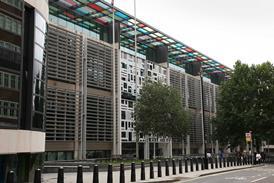





















A not-so-happy new year for the Ministry of Justice, which was berated by MPs this week over its record on legal aid.
The House of Commons public accounts committee published what it called a ‘scathing’ report on the progress made by the department to future-proof the legal aid sector since a 2024 investigation. But if the committee’s report was scathing, the committee chair’s comments were even more withering.
The government’s legal aid reforms ‘are now at serious risk of going down in history as an extinction event for the entitlement to access to legal advice in large parts of the country’, Sir Geoffrey Clifton-Brown MP said.
‘Our report finds government remaining stubbornly uninterested in whether this is the case, but it must now wake up on this subject. If it refuses to, the Ministry of Justice should, frankly, consider changing its name to the Ministry of Justice (for Certain People). This might be more appropriate for a nation without a sustainable solution in the long-term to provide legal aid to the digitally excluded quarter of the population who need it most.’
The committee found that the MoJ and Legal Aid Agency lacked understanding of whether people defined as digitally excluded – roughly 24% of the population – can access legally aided advice remotely, and the wider costs to the system, including the impact on courts of growing numbers of litigants in person.
While legal aid fees have increased in some areas, the committee criticised the absence of a routine mechanism for reviewing the profitability of all types of legal aid fees.
A £50m investment to update legal aid IT systems was insufficient to mitigate the cyber-attack that enabled hackers to access and download personal data from legal aid applicants between 2007 and 2025. ‘While MoJ told us it has reviewed its systems to identify risks following the attack, it does not yet know whether it will have sufficient funding to address promptly the weaknesses it has identified,’ the report said.
The committee has asked the MoJ to set out:
How it plans to better monitor whether digitally excluded people can access legal aid;
What it is doing to close gaps in provision where legal aid deserts still exist;
The results of, and its response to, its survey of local authorities about the effects of shunting costs to other government departments, and any further investigations it plans;
The impact of the increase in litigants in person on courts, including any additional time and cost as a result, and how it will improve the data it bases its analysis on;
Plans to routinely review profitability and sustainability for all types of legal aid;
Lessons learned from the LAA cyber-attack, and how and when it plans to share these lessons with other government departments; and
Whether it has sufficient funding to address the key risks identified from the review of its IT systems, once allocations are decided.
The Commons justice committee’s session earlier this week with Law Society head of justice Richard Miller, bar chair Kirsty Brimelow KC and the Legal Aid Practitioners Group’s Rohini Jana heard of potential quick fixes.
Miller told MPs that the means test has not been uprated since 2010, resulting in fewer people qualifying financially for legal aid. The committee heard that three years ago the MoJ came up with a revised scheme for how the means test should operate based on the Joseph Rowntree Foundation’s minimum income standards. ‘It had a real solid, rational underpinning. It was a brilliant piece of work that the ministry did there – and it’s not been implemented.’
If, because of the cyber-attack, the means test reforms cannot be implemented at this stage, Miller said existing allowances should be uprated, bringing more people into scope.
Fee increases for housing and immigration work – the first uplifts in civil legal aid fees since 1996 – came into force last month. However, Jana noted that the highest rate for complex litigation in those areas is only half what an unqualified paralegal can charge a private client under the guideline hourly rates.
Responding to the public accounts committee’s report, the MoJ said the government inherited a legal aid system in crisis. ‘We recently confirmed an additional investment of up to £92m per year in criminal solicitors, alongside a further £20m in immigration and housing legal aid fees – the first major increase since 1996. This investment will help to tackle years of neglect and will support the sector’s long-term sustainability,’ a spokesperson said.
Governments are expected to reply to select committee recommendations within two months of publication.