


















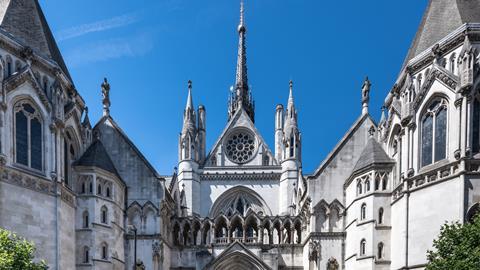

Mazur appeal has been upheld
12.30pm: That wraps up our live coverage of the Mazur ruling. The full round-up of reactions can be found here and a blog post on how this is the law’s Bobby Ewing moment is here. Thanks for reading.
12.25pm: Nick McDonnell, director and costs lawyer at Kain Knight, says the judgment ‘confirms that properly supervised delegation is not only lawful, but fundamental to the efficient delivery of legal services’.
He adds: ‘Crucially, it makes clear that responsibility for litigation rests with the authorised lawyer, even where tasks are carried out by experienced non-authorised staff. The judgment strikes a sensible balance between regulatory protection and the practical needs of a modern, diverse legal profession.’
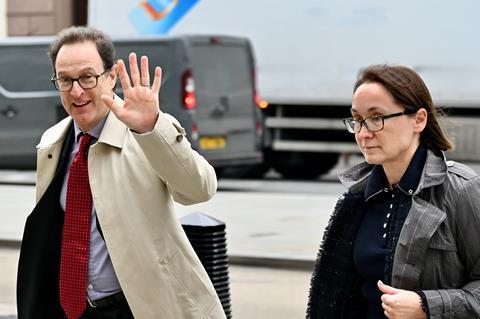
12.15pm: Julia Mazur and Jerome Stuart have said the judgment ‘poses further questions’ which ‘may lead to an increase in satellite litigation’.
They added: ‘If the judgment does not clearly define where delegation ends and “acting as a solicitor” begins, it leaves firms, regulators, and clients to navigate that boundary without clear guidance.’
Their statement was issued through a group called Blind Justice UK, a public interest initiative founded by a litigant in person after his own experiences in court.
Blind Justice has announced a national public panel series in collaboration with Mazur and Stuart which will ‘address the questions this judgment leaves unresolved who is doing the work on your case, what qualifications do they hold, and who is accountable when things go wrong’.
12.05pm: Going back to the Court of Appeal judgment, and it is worth focusing on how the judges accepted CILEX’s submissions on delegation. Birss says this was a ‘widespread, general and well-regulated practice’ by solicitors to unqualified individuals before the 2007 act. Delegation did not absolve solicitors of their professional responsibilities for the performance of the persons to whom they delegated, and did not undermine the solicitors’ duties to their clients and the court.
The point is picked up by Paul Bennett, partner with Bennett Briegal and a regulatory expert. He says: ‘The decision is clear. The regulators opposed to the delegation principle on which so many law firms relied, seemingly forever, were wrong. The High Court was wrong.
‘The Court of Appeal has been explicit: delegation requires proper direction, management, supervision and control. The authorised individual must put in place appropriate supervisory arrangements for non-admitted persons. The level of oversight must match the circumstances. In short, the principle of delegation is restored, but the standard of supervision is not "whatever we were doing before September 2025".’
11.55am: In a statement, the SRA acknowledged the ‘concern and confusion' among practitioners and firms adding it had been ‘focused on providing support to them’.
The regulator ‘welcomed the clear direction from the Court of Appeal’.
It added: ‘The clarity the judgment provides will enable us to review our guidance and update it where necessary. We will do this as soon as possible. We will be working closely with other regulators and organisations to make sure there is consistency and clarity for everyone.’
11.52am: David Bailey-Vella, chair of the Association of Costs Lawyers, said: 'This decision should calm the legal market. It also stresses the responsibility of authorised persons – such as costs lawyers – to supervise the conduct of litigation. We welcome that responsibility and believe we have a key role to play in ensuring law firms’ compliance.'
11.50am: Lots of reactions coming in on social media.
Diane Askwith, partner and chartered legal executive at Ison Harrison: ‘I’m very sorry people have lost their jobs. Thank you to hashtag#isonharrison for supporting me through this very difficult and uncertain time.’
Stefanie Smith, non-practising CILEX Fellow: ‘This is a great result for many. Sadly, it is isn't so easy for all of those who lost their jobs and had their reputations (and mental health) damaged. The universal damage to members is irreparable.’
Gary Yantin, business director at Teal Compliance: ‘That seemed like a very expensive and time consuming way to clarify the law and practice of law. Good result in the end. But wow, the effect on the profession.’
11.20am: Iain Miller, head of the legal services regulatory team at Kinglsey Napley, who advised CILEX pro bono, said: ‘There will be many individuals and businesses, including those operating in the not-for-profit sector, who will be relieved by this outcome.
‘It will also be a relief for many members of my profession, be they solicitors or their firms, who have had to grapple with the uncertainty and disruption which was caused by last year’s judgment.’
11.13am: To make an analogy that only people of a certain age would understand, we are currently at the stage where Bobby Ewing is emerging from the shower, with the entire last few months just one long nightmare.
11.10am: CILEX chief executive Jennifer Coupland described the ‘common-sense’ judgment as the ‘most consequential for legal services in recent history’ and a ‘victory’ for CILEX members, ‘access to justice, the interests of consumers and the encouragement of a thriving, diverse and competitive legal sector’.
She added that the organisation would look to lobby the government to address ‘regulatory shortcomings’ of the LSA.
‘We also hope that this judgment offers a moment of reset for legal services where we can work collaboratively with the rest of the sector to ensure a consistent and clear response to the judgment that supports ordinary people seeking justice.’

11.05am: Birss states in the Court of Appeal judgment that there has always been a widespread and well-regulated practice of delegation by solicitors to unqualified individuals, even before the Legal Services Act. That legislation, he says, did not fundamentally change this position.
11am: First reactions are starting to come in. Law Society vice president Brett Dixon said the judgment ‘confirms the continuing importance of supervision being in place which will require further regulatory guidance’. He added that the Law Society would be updating its guidance and practice note ‘to ensure it aligns with the ruling’.
10.57am: First Gazette reader comment: ‘What a huge waste of everyone's time and mental health that was.’
Plenty of legal executives would no doubt agree with that sentiment.
10.55am: Both Lady Justice Andrews and Sir Geoffrey Vos agree with the Birss ruling. Andrews says that in essence, the question is whether the unauthorised person, in carrying out whatever tasks which fall within the scope of 'conduct of litigation' have been delegated to them, is in truth acting on behalf of the authorised individual.
She adds: ‘If they are, it is the authorised individual who is conducting the litigation. But if the reality is that the litigation is not being conducted by the unauthorised person for and on behalf of the authorised individual, they will be committing an offence.’
10.51am: There are, however, caveats. Birss says the delegation of tasks by the authorised individual to the unauthorised person requires ‘proper direction, management supervision and control, the details of which are a matter for the regulators’.
Firms must put in place appropriate arrangements, and the degree of appropriate control and supervision will always depend on the circumstances.
10.48am: Birss says Mr Justice Sheldon was wrong to distinguish between (a) supporting or assisting an authorised solicitor in conducting litigation, and (b) conducting litigation under the supervision of an authorised solicitor.
He adds: ‘It is not unlawful for an unauthorised person to act for and on behalf of an authorised individual so as to conduct litigation under their supervision, provided the authorised individual puts in place appropriate arrangements for the supervision of and delegation to the unauthorised person.’
10.45am: Still digesting the full 45 pages of the judgment, but in essence this should come as a relief to legal executives, paralegals and trainees. The ruling effectively says that as long as there are appropriate safeguards, the working models that had developed pre-Mazur can stay in place.
10.37am: The full ruling is here. Lord Justice Birss has given the lead judgment.
The key section is paragraph 187, where Birss says: ‘An unauthorised person may lawfully perform any tasks, which are within the scope of the conduct of litigation, for and on behalf of an authorised individual such as a solicitor or appropriately authorised CILEX member, provided the authorised individual retains responsibility for the tasks delegated to the unauthorised person (both formal responsibility and the responsibilities identified at section 1(3) of the 2007 Act). In that situation, the authorised individual is the person carrying on the conduct of litigation.'

10.35am: BREAKING NEWS: The Mazur appeal has been upheld.
10.25am: Quick recap on the runners and riders in this race.
The appellant was the Chartered Institute of Legal Executives, with support from the Association of Personal Injury Lawyers and Law Centres Network.
Arguing in favour of Mazur was the Solicitors Regulation Authority and Law Society. Julia Mazur and Jerome Stuart also made submissions in favour of dismissing the appeal. The oversight regulator, the Legal Services Board, made general submissions but did not reference any case.
10.20am: The judgment will not only be studied carefully by the legal sector but by politicians too. Justice minister Sarah Sackman said in November that while the Mazur judgment had not changed the law, it had ‘broad implications for the legal profession and the wider justice system’.
‘This remains an emerging and rapidly evolving picture, and my officials are working closely with legal services representative bodies, regulators and wider stakeholders to assess the potential consequences,’ added Sackman.

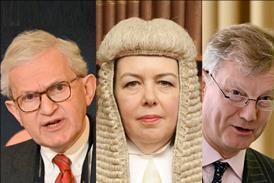
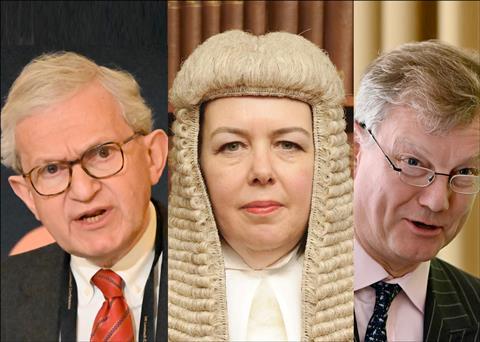
10.15am: We’re all set for the handing down of the Mazur judgment, which is due in about 15 minutes. Sir Geoffrey Vos, master of the rolls, Lord Justice Birss and Lady Justice Andrews will have their say on one of the most talked-about cases in the legal profession this century. The hearing ended just under five weeks ago, the speed of the ruling giving an indication how important this case is to so many.
This article is now closed for comment.












38 Readers' comments