



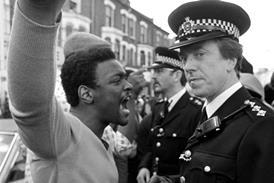



















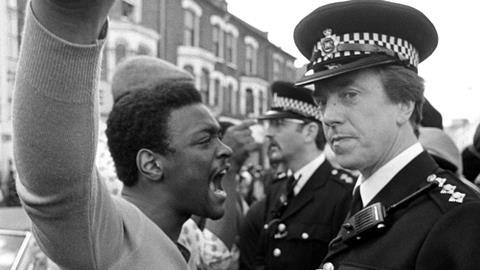
The Race Relations Act 1976 was ‘not a finished product’, but it was certainly groundbreaking. Catherine Baksi assesses the act’s legacy
The low down
It has been 50 years since the first official celebration of Black History Month in the US, an anniversary the UK shares with regard to the Race Relations Act 1976. Legislation to counter discrimination has developed piecemeal, often triggered by egregious acts of racist violence or discrimination. The 1976 act was the third piece of primary legislation that aimed to tackle race discrimination. It replaced boards with ‘conciliation’ functions with harder-edged legal remedies and created the Commission for Racial Equality, which had enforcement powers. This became the template for legislation tackling several other forms of discrimination. Yet the 1976 act had gaps that needed filling. Contemporary tests for equality legislation multiplied, as rhetoric on race and immigration dialled up.
The year 1976 was a watershed moment for racial justice in the UK and internationally.
In the US, Black History Month was officially recognised nationally for the first time. On this side of the Atlantic, Rock Against Racism was founded to counter a rising tide of fascism and white nationalism.
Eight years after his infamous ‘rivers of blood’ speech, Enoch Powell, the Conservative MP for Wolverhampton South West, warned that Britain was ‘still being eroded and hollowed out’ by ‘alien wedges’.
The year also saw parliament pass the third Race Relations Act to address racial discrimination and tension, and fill gaps left by the acts of 1965 and 1968.
‘We all remember the stories of the signs in the windows of boarding houses and pubs, “No Irish, no coloureds”,’ says I. Stephanie Boyce, a former Law Society president and its first black leader. ‘And where there was no sign, the bigotry was clear to those who were turned away from lodgings, or barred from public spaces, housing and jobs.’
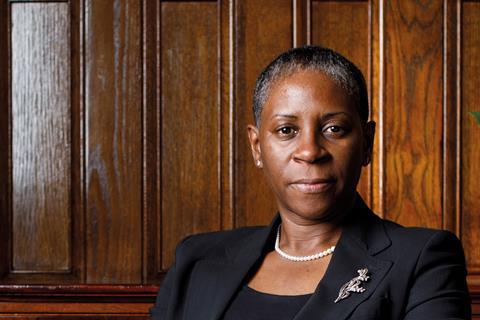
With the onset of larger-scale immigration from the Commonwealth, Boyce says there was recognition from parliament ‘that not all were equal and that some, because of their race, colour, ethnic or national origins, were being discriminated against’.
To resolve this, she continues, ‘parliament set about introducing legislation to address the overt discrimination and inequality that was beginning to emerge’ to ‘bring about racial equity across all aspects of British life’.
The groundbreaking 1965 act was the first legislation to address racial discrimination in Britain (Northern Ireland was excluded). It prohibited discrimination on grounds of race in public places and established the Race Relations Board to conciliate discrimination complaints.
The 1968 act extended the provisions beyond public places to prohibit discrimination on the grounds of race in housing, employment and public services. It also strengthened the Race Relations Board’s powers to investigate complaints and set up the Community Relations Commission to promote ‘harmonious community relations’.
Explaining why a third act was needed, the immediate past president of the Law Society Mark Evans says: ‘The Race Relations Act 1976 was introduced because the earlier legislation, while pioneering, did not provide robust protection against discrimination.
‘Concerns were growing in the early 1970s that the framework established by the earlier legislation was not delivering meaningful change… evidence suggested that racial discrimination remained widespread and highlighted the need for stronger legislation and more effective enforcement mechanisms.’
The Race Relations Act 1976 received royal assent on 22 November and marks its 50th anniversary this year – just after Black History Month, which is being marked by the Law Society.
BHM is, says Evans, ‘an opportunity to celebrate the black solicitors whose contributions shape, support and sustain black life across the UK,’ adding that black history is ‘an integral part of Britain’s national story’.
Changes needed
The 1976 act followed a government review of race relations legislation and a report from the Commons committee on race relations and immigration, which recommended a series of changes to the earlier regime.
The tensions and widespread anti-immigration sentiment in the country were evident as the bill made its way through parliament. In June, Sikh teenager Gurdip Singh Chaggar was murdered in an unprovoked, racially motivated attack in west London.
Tensions flared at the 1976 Notting Hill Carnival in London. There were violent clashes between police and predominantly black carnival-goers, driven by the disillusionment and resentment over heavy-handed and discriminatory policing and the controversial stop-and-search, or ‘sus’ laws.
‘The 1976 act was more expansive than the previous acts of 1965 and 1968, extending the patchwork of protection from discrimination that each had set out to address,’ notes Boyce. The broader protections covered discrimination in employment, education, training, housing, and the provision of goods, facilities and services.
While each act added extra layers of protection, the enforcement powers gained by successive acts made the difference, suggests Boyce.
Crucially, the 1976 act extended the definition of discrimination to include ‘unjustifiable indirect discrimination’ – when a rule, policy, or practice applies to everyone in the same way but puts a specific group of people at an unfair disadvantage.
Home secretary Roy Jenkins gave examples of what that might cover during the bill’s second reading: ‘It will be unlawful to impose, for instance, dress requirements at work or the adoption of recruiting tests which operate to disqualify coloured applicants at a substantially higher rate than white applicants without their being significantly related to the job requirements or performance.’
The act gave direct access to justice to individuals who believed they had been discriminated against. For the first time, they could take complaints of race discrimination directly to industrial tribunals (now employment tribunals) or designated county courts.
It also replaced the Race Relations Board and the Community Relations Commission with the Commission for Racial Equality. This independent body was given responsibility to enforce legislation and conduct research to inform government policy on race relations.
Jenkins told MPs its ‘principal functions’ would be ‘to work towards the elimination of discrimination, to promote equality of opportunity and good relations between persons of different racial groups generally, and to keep the working of the legislation under review.
‘It will have a major strategic role in enforcing the law in the public interest. It will be able to assist and represent individuals in appropriate cases, but it will also be concerned with wider policy: to identify and deal with discriminatory practices by industries, firms or institutions.’
The commission would eventually merge with similar bodies to become the Equality and Human Rights Commission following the Equality Act 2006.
Black representation has ‘Stagnated for over a decade’
The most recent data from the Solicitors Regulation Authority shows that 20% of practising certificate holders are black, Asian or from minority ethnic groups. Black solicitors make up 3% of those who have shared their ethnicity. The 2021 census shows that black people in England and Wales account for 4.4% of the working-age population.
The percentage of black solicitors increased from 1.7% in 2015, but black solicitors still make up only 3% of senior roles and 3% of partners across all law firms. Representation is significantly lower in larger firms, with black solicitors accounting for just 1% of partners in firms with 50 or more partners.
Law Society president 2025-26 Mark Evans tells the Gazette that ‘further work is needed to ensure that the legal profession is accessible to talent from all backgrounds’.
He notes that Chancery Lane is working on a project to identify ‘effective approaches to leadership development, mentoring and sponsorship that support the progression of diverse talent into senior roles’. The findings are due to be published in November.
At the bar, 3.5% of barristers and 1.2% of King’s Counsel are black. Progress has also been slow in the judiciary. While 16% of judges come from an ethnic minority background, just 1% are black – and the latter figure has remained unchanged for over a decade. No black judge has held a post higher than the High Court. The 10 recently appointed High Court judges are all white.
Evans calls for the appointment process to be ‘urgently reformed’. He wants to see a review or removal of the requirement to consult sitting judges on candidates’ suitability, known as ‘statutory consultation,’ saying it is ‘not working fairly or transparently’.
Despite the plethora of schemes designed to increase judicial diversity, black representation has ‘stagnated for over a decade’, says Cordella Bart-Stewart (pictured), solicitor and founder of Stewart & Co.
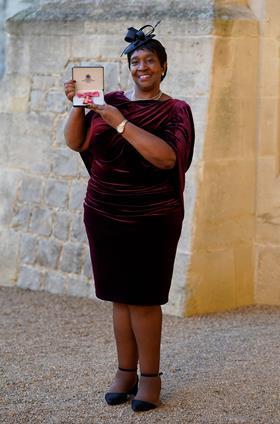
Bart-Stewart, an immigration tribunal judge, is a founder of the UK Association of Black Judges, established last year.
In the last 12 months, she reports that the association has held several meetings with the Judicial Appointments Commission and senior judiciary to remove identified barriers to appointment and progression.
On a positive note, she says: ‘The senior judiciary has been supportive, continuing to offer or develop mentoring opportunities to current and aspiring judges.’ She adds that the group meets regularly with Lady Justice Whipple, the lead judge for diversity.
Short-lived optimism
Initial optimism that the 1976 act would pave the way to equality for ethnic minorities was short-lived. The government inquiry into the Brixton riots of 1981 found that it had failed to have a significant impact on race discrimination in Britain.
The home affairs committee published reports criticising the new Commission for Racial Equality’s ability to enforce the legislation. In a 1985 report, the commission itself highlighted that not enough had been done to eliminate discrimination.
A notable omission from the 1976 act was the police. Wider public authorities were also excluded from its core duties.
The decision to exclude policing was felt to be a mistake, notes Boyce, but one which avoided the need to address the volatile relationship that had emerged between the police and those the act sought to protect in subsequent race riots.
Macpherson
The act’s exemption for the police was only remedied by the Race Relations (Amendment) Act 2000 in the wake of the Macpherson Report that followed the racist murder of teenager Stephen Lawrence in 1993 – the single most influential driver for reform.
Published in February 1999, the Macpherson Report concluded that the Metropolitan Police investigation into the teenager’s murder was marred by ‘institutional racism’.
Despite criticism, the 1976 act remained the cornerstone of UK race discrimination law until it was repealed and superseded by the Equality Act 2010. That change followed high-profile legal failures, landmark public inquiries, and European court rulings that exposed legislative gaps and loopholes.
Boyce notes that Northern Ireland was not included in any of the race relations acts or the Equality Act 2010, explaining that successive British governments believed there was insufficient evidence of racial problems to justify legislation.
A foundational model
The experience of legislation against race discrimination, and efforts to enforce the law, provided a template for laws to tackle other forms of discrimination.
Age was not protected by UK law until 2006, before which employers could set arbitrary mandatory retirement ages.
Disability also required attention. A case brought by a legal secretary against the law firm where she worked went all the way to the European Court of Justice, highlighting the rigidity of the law.
Sharon Coleman claimed mistreatment by her employer, Attridge Law, because she was the primary caregiver for her disabled son. But UK legislation, like the Disability Discrimination Act 1995, afforded protection only if the employee themselves was disabled.
The 1976 act also fell short in failing to acknowledge ‘intersectional’ issues. If a claimant was a black woman who suffered discrimination, she had to file two separate claims – one under the Race Relations Act 1976 and one under the Sex Discrimination Act 1975.
'It feels as if we are going backwards when it comes to many of the rights the various acts sought to secure'
I. Stephanie Boyce
Tribunals struggled to deal with these overlapping characteristics and frequently rejected claims if an employer could prove that they did not discriminate against white women or black men.
But Evans suggests: ‘The enduring significance of the act lies in its recognition that achieving equality requires more than stopping overt racism. It helped shape public understanding of equality and influenced how public bodies and organisations approach race discrimination.’
He continues: ‘It strengthened enforcement, addressed structural barriers and improved access to justice. Its principles continue to underpin the UK’s approach to tackling racial discrimination and promoting equal opportunity.’
For Boyce, the legacy of the 1976 act and its predecessors was the Equality Act 2010. But she suggests that its real significance was the ‘shift in attitudes’.
She laments the ‘increasingly hostile anti-immigration rhetoric’ that has become more prevalent today. ‘It feels as if we are going backwards when it comes to many of the rights the various acts sought to secure.’
'The enduring significance of the act lies in its recognition that achieving equality requires more than stopping overt racism. It helped shape public understanding of equality and influenced how public bodies and organisations approach race discrimination'
Mark Evans, Law Society president, 2025-26
Evans says that racial inequalities persist across education, employment, criminal justice and health. While legal protections are ‘essential’, he argues that legislation alone cannot eradicate racism.
‘We need continued action to address cultural change, accountability and structural barriers,’ he adds.
While the Equality Act remains a vital safeguard, Evans says that ‘equality is not a finished product’.
He tells the Gazette: ‘Fifty years after the Race Relations Act 1976, there has been progress, but more work is needed to ensure that everyone can access opportunities and succeed regardless of their background.’

Modern priority
‘Protecting the rights of black people and other minorities is increasingly pressing,’ says Andrew Powell KC, a barrister at 4PB. He points to a 9% rise in race hate crimes and a 13% rise in religious hate crimes in England and Wales last year, noting that Asian and black adults were more likely to be victims of racially motivated hate crime than white adults.
He wants to see better policing of hate crime and extremist activity taken more seriously by the police, courts, and other institutions, as well as greater accountability of social media companies to tackle racist abuse and extremist content on their platforms.
One lacuna not covered by UK discrimination law, according to academics at the London School of Economics, is disadvantage due to class. They argue this change is needed so that it would not be permissible to deny someone an opportunity because of their accent, education, postcode or any other indicator of their socio-economic background.
The government has arguably put ‘class’ at the heart of its equalities agenda, announcing plans to set up a unit to improve outcomes for white working-class people. Such messaging places social class on a par with sex, race and disability for the first time, but Bridget Phillipson, minister for women and equalities, is not looking to make social class a protected characteristic under the Equality Act.
‘Class is undoubtedly an issue which can cause individuals to experience less favourable treatment,’ says Powell. But, he adds, this is already reflected in Part 1 of the Equality Act 2010. This requires public authorities to have due regard to reducing inequalities of outcome resulting from socio-economic disadvantage.
To give class legal protection under the Equality Act, he explains that there must be an agreed definition of what it constitutes and how it is measured. He suggests this is ‘not clear-cut’ because it is determined by several factors, including wealth, education, occupation and family background.
At the half-century mark for the Race Relations Act 1976, discrimination remains a live topic and enforcing remedies a significant challenge.
Catherine Baksi is a freelance journalist








No comments yet