





















Reforms to drag centuries-old legislation governing wills into the digital age are overdue as probate disputes soar. Rachel Rothwell reports
The low down
Probate disputes are on the rise. Estates are increasing in value as property-rich baby boomers die off. There are more blended families and the population is ageing. Yet even now, too many people fail to make a will. Proposals to overhaul and modernise existing legislation governing wills, which dates back nearly two centuries, have been issued by the Law Commission. Key measures include the introduction of digital wills, a change to the capacity test, bolstering the law relating to undue influence and abolishing the rule that marriage automatically revokes a will. The reforms would also give judges more power to decide that an individual has made a valid will, even where they did not comply with all the usual formalities. In circumstances where testamentary intention is clear, this potentially opens the door to wills that have been made by text message or voice recording.
‘Will disputes are booming,’ says Claire Cox, partner at Willans in Cheltenham. ‘The stats are quite crazy. There are more than ever in the High Court, even though it’s expensive – well into the six figures. It’s because we have more blended families, leading to unintended consequences of out-of-date wills. Also, estates tend to be worth more now as the baby boomers start to pass away, leaving high-value properties. If it’s £400k, it’s worth arguing about.’
Cox’s comments are borne out by the figures. There were 11,362 applications to block probate in 2024, a whopping 56% rise from 2019. Meanwhile, the UK population is ageing. The Office for National Statistics predicts that more than a quarter of us will be over 65 by 2041, fuelling arguments over testamentary capacity. Bleakly, a record 500,677 patients were diagnosed with dementia as of May 2025, according to the NHS.
All this is a far cry from the horse-and-carriage world of 1837, when the current Wills Act came into force at the start of Queen Victoria’s reign. After outlasting our two longest-reigning monarchs, that legislation now looks set to be replaced by a brand new Wills Act. The Law Commission published a report and draft bill last year after extensive consultation. The government has welcomed the report and is due to give its detailed response in the late spring. If it wants to proceed with the draft bill, this can be introduced at committee stage in the House of Lords through a special parliamentary procedure. It will be debated by the Lords committee and then can either go straight to the King for royal assent, or if amended, will first go to a Commons committee of experts for debate.
'A judge will be able to see what the testamentary intention was, even if it’s a document that was not produced as a will'
Helen Forster, HTF Legal
So, should the Wills Act 1837 really be killed off? Some argue that the black-and-white, rigid nature of the act is part of its virtue. There is almost no scope for judicial intervention, which has provided certainty for the past 189 years. But others – including Ian Bond, in-house legal counsel at Farewill – think the time has come for reform. ‘Only six or seven out of 10 people in England and Wales have made a will, because this piece of legislation is a blocker to that,’ he asserts. ‘It should be much, much easier to make a will, and this shouldn’t be something that people only think about once, towards the end of their life, when they’re past their mental and agile best. What we need is a really simple and straightforward, modern system for making wills.’
A valid will must comply with various formalities and the current Wills Act gives judges very little latitude to validate a will that fails to meet them. The new bill retains these formal requirements, but gives judges a new ‘dispensing power’ to decide something is a valid will even where the formalities have not been met, as long as the testamentary intention was clear.
Helen Forster, founder of HTF legal, says: ‘A judge will be able to see what the testamentary intention was, even if it’s a document that was not produced as a will. There’s been much case law in other countries bringing this to the fore, for example in Australia, where someone texted a loved one clearly setting out his wishes. It was held that it did have some testamentary intention.’
'The stats are quite crazy. There are more will disputes than ever in the High Court, even though it’s expensive – well into the six figures'
Claire Cox, Willans
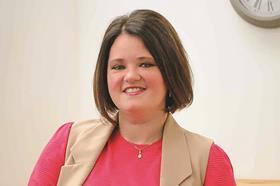
Forster says the new judicial power will be very helpful where there is a mistake in a will. ‘It stops having to argue it in a variety of other ways, such as clerical error, rectification and all these other long-drawn-out, expensive processes. So there’s a lot of logic to having this ability, but we should be careful about it being used for something more borderline. For example, with a text message, was that actually produced by the individual? We don’t know how judges are going to view this. We’re not in a position where we can say, it’s going to be the same as Australia.’
For Bond, the proposal for judicial discretion is ‘absolutely fantastic’. He points to Australia, Canada, South Africa and some US states, which all adopted the Wills Act 1837 and have interpreted it in different ways. ‘[They] allow the judiciary to say, OK, we’ve got a clear text message, a recording or video of them setting out their instructions; or they haven’t signed in the right way, or the husband and wife have signed each other’s mirror wills… let’s allow a judge to look at it, let’s set out the guidelines in terms of what [the judge] should look at, and have represented parties. Because if someone is going to make the time and effort to set out what they want to happen when they’re gone, we should encourage that and help that. Yes, we want them to do it all correct technically, but if they don’t get there, we don’t want to just say, that’s it – you’ve failed – and nothing else happens.’
If something as simple as a text message might be deemed to have testamentary value, will people need to be much more careful about any promises they make regarding their estate? ‘It could be habit-changing,’ suggests Bond. ‘But there’ll be barriers, there’ll be a test that will come into place from the judiciary – it will have to be more than an off-the-cuff remark, and the judiciary will decide where to set the bar.’
Bond adds that more broadly, the reforms will facilitate more people making a formal will. ‘The more people do that, the less you’ll have to rely on these dispensing powers… so I don’t think we’ll see [text message-type wills] on a hugely regular basis.’
'If someone is going to make the time and effort to set out what they want to happen when they’re gone, we should encourage and help that'
Ian Bond, Farewill
Preventing predators
In response to growing concerns about predatory marriage, the Law Commission has recommended abolishing the current rule that a will is automatically revoked on marriage or civil partnership. This, however, is unpopular with many probate lawyers.
Emily Deane, head of government affairs at the Society of Trust and Estate Practitioners, says: ‘The intention here is worthy, but the industry is split, because even though predatory marriage is on the rise, it’s still quite a small demographic of the population. And the problem is people do get married and then forget to write a new will.’
Stephen Lawson, partner at IDR Law, notes that while predatory marriage is ‘tragic’ when it occurs, it is not that common compared to the ‘sheer numbers’ of people who will marry and then fail to change an existing will (which might, for example, leave everything to a former girlfriend or boyfriend, rather than their new spouse). Moreover, a predator can still abuse without the need to marry simply by gaining access to the victim’s bank account. ‘My own view and experience is that, numerically, more prejudice will be suffered if the law is changed. Because people don’t say, “will you marry me, please can we make a new will”. And if you search the internet for people who die on honeymoon [and so would not have the chance to write a new will], there are quite a few. They go on safari and get eaten by lions, or go somewhere warm and drown in the sea. It’s [more common] than the number of predatory marriages.’
Lawson suggests that in making its decision, the government will be looking at where the ‘balance of prejudice’ lies. ‘I think the balance of prejudice is clearly in favour of keeping the law as it is,’ he adds.
Ian Bond, in-house legal counsel at Farewill, suggests an alternative solution. ‘There’s a middle way,’ he says, ‘which is to say that if marriage happens, then the will is revokable, and then it goes to the judiciary, who can look at the circumstances… Hopefully there will be a debate when the proposals hit parliament, because this is a really emotive issue.’
Measuring capacity
A less popular aspect of the commission’s reform proposals relates to assessing testamentary capacity. The test of whether someone has the understanding to make a will is currently governed by Banks v Goodfellow from 1870, which is used by professionals preparing a will and by courts deciding if a will is valid. But where the Court of Protection is assessing someone’s capacity to make a will, it uses a different test: that in the Mental Capacity Act (MCA) 2005. The commission says it is not justifiable to have two legal tests for the same question, depending on who is asking. So it proposes that everyone should use the MCA test, which has many lawyers frowning.
Stephen Lawson, partner at IDR Law and chair of the Law Society’s Private Client and Estates Committee, says: ‘I’m a passionate advocate for Banks v Goodfellow. I do worry that suddenly changing the law on that will rewrite nearly 200 years of law and inevitably lead to a lot of litigation about what it means. Everyone will test the boundaries.’
He adds: ‘[But] I do want lawyers to understand more about testamentary capacity, about what social façade is, and how someone might be able to chat about cricket, but that doesn’t mean they have capacity to make a will.
‘If I go out of my drive, my dog can make a choice whether it goes right or left. It’s got capacity to make a choice, but I don’t think anyone’s going to argue it has capacity to make a will. You might not like that illustration, but it’s quite profound to me. I’m trying to get will preparers to have more confidence to delve deeper. They ask clients all sorts of personal information about how much money they’ve got, and how long they’ve been married etc., but they won’t go in and say, “tell me what a will is”, and “how are you?”, and “do you ever get confused?”, and “are you taking prescription medication?”.’
Forster adds: ‘Banks v Goodfellow is a really robust test: does someone understand what a will is, what their assets are – not to the penny, but they know what they’ve got – and do they understand and appreciate the people who would ordinarily have a claim. The testator doesn’t need to leave it to them, but they have to understand that. Even when the MCA came in, judges said “Banks v Goodfellow is a more robust test, we like this test”. So that’s what we still use to date and I’m a big fan of it.
‘The MCA has a test for mental capacity in there, which we use for other areas of what we do, like lasting powers of attorney… [But] whether the specific test that’s in MCA is robust enough for wills remains to be seen.’

The key issue here is that under the MCA, there is a presumption that someone does have capacity unless there is reason to think otherwise. ‘Presumption means I’m already assuming that, whereas what I should do is establish that. That’s the difference,’ explains Forster. ‘Banks v Goodfellow establishes mental capacity, the MCA has a presumption of capacity unless you’re proved not to have it. There’s concern among a lot of practitioners about, if that test comes in, is it robust enough – not just to protect the testator, but also to protect the practitioner who’s preparing that will.’
The result may be that more lawyers feel they need to get a medical assessment of the testator in order to protect both themselves and the client’s will.
One seemingly neat solution favoured by some would be to take the Banks v Goodfellow test and place it within the MCA, beefing up its current code of practice. ‘So, we effectively bring these two tests together to get one test that we’re all very clear about,’ suggests Bond. ‘And it has to be so that someone who is without expertise in law or medicine can intuitively think, yes, that’s what you need to make a will. It shouldn’t be, when someone’s died, doctors and lawyers arguing over a position in a court. It should be obvious to the ordinary person – yes, they knew what they were doing when they made that will.’

Cox recently acted for four sisters in a high-profile will dispute involving testamentary capacity, Ginger & Ors v Mickleburgh & Ors [2026] EWHC 100 (Ch). The sisters succeeded in having their father’s will declared invalid. ‘This case has been a wake-up call for will writers,’ says Cox, ‘because it shows that even a [professional’s] testimony can be set aside, if the correct steps for establishing capacity aren’t followed.’
In Ginger, the court found that the experienced paralegal who prepared the will had not completed the necessary formal capacity assessment, despite her client being on anti-psychotic medication and having previously been sectioned. The judge rejected her evidence that a mental health nurse who had been with the client at the time of the meeting had confirmed the client’s capacity. The judge also criticised the lawyer’s use of a tick-box questionnaire without any attendance note. ‘One learning point from this is that lawyers should always include as much detail as possible in an attendance note,’ says Cox. ‘After all, in a will dispute, the key witness is always dead.’
Under the influence
Where a testator is pressured into making a will, it can be challenged for ‘undue influence’. This is one area where the current law operates very poorly.
Forster explains: ‘Undue influence has been notoriously hard to prove… but now under the Law Commission’s draft bill, the burden is reversed and the person who the new will benefits will have to prove they didn’t exert undue influence. They’re also broadening the definition so that it’s not just a physical coercion. We’re now talking about psychological manipulation, the persistent pressures that people give you. And people being isolated as well – “unless you do this, you won’t see your grandson”.’
Forster notes that the courts will be able to infer undue influence from circumstantial evidence, such as unexpected last-minute changes to a will, especially by someone who’s frail or dependent. She cites one case involving a woman in her 80s who had made her own will a few weeks before her death, leaving everything to a TV repairman who had recently befriended her. ‘In that case, there wasn’t enough evidence to establish undue influence, although they did manage to establish that there had been no “knowledge and approval”. But in future, in a case like that, it would be up to that TV repairman to prove it wasn’t undue influence, which would make it a much quicker process.’
A key part of the drive to get more people making wills is the introduction of digital wills, which must comply with the same requirements as paper wills, plus some extra safeguards. Electronic wills will only be valid where they are registered on a government-authorised storage system.
Emily Deane, head of government affairs at the Society of Trust and Estate Practitioners (STEP), is ‘generally supportive’ of the recommendations. But she wants to see a ‘significant pilot stage’ involving the Law Society and STEP to ensure there are adequate safeguards, particularly to protect the elderly.

For Bond, digital wills could be a big step forward in encouraging people to make a will. They could be made, signed and witnessed on video call using a secure system with two-factor authentication, with the whole thing recorded. ‘The technology is there and we should embrace it and use it,’ he enthuses.
Lawson is comfortable that technology is now advanced enough to accurately confirm someone’s identity, but is concerned about how such wills may be stored. ‘I remain to be convinced that any company can do an electronic will and keep it safe. Because nobody else seems to keep [data] safe,’ he remarks.
The solicitor adds that some innovators are already developing AI programmes seeking to provide capacity assessments over video. ‘I’m not that impressed with what I’ve seen so far,’ he says, ‘as the AI is mainly asking memory questions… and, as the judges say, capacity is not a memory test.’
Time for change
When a new Wills Act does come into being, it will take the courts a while to iron out its creases. After all, when the 1837 act came in, lawyers had to wait until 1870 for their beloved capacity test in Banks v Goodfellow.
‘If we have a Wills Act 2026, we may not have a settled position on how it will work until 2050,’ says Bond. ‘But it’s generational. The last Wills Act was Queen Victoria, and the one before that was Henry VIII. We don’t do this very often. But if we do the best we can and put the statute in place, the judiciary will reflect over time and get us to a position that could then last for another 180 years.’
What is clear is that, as estates grow in value and family relationships become more complex, too many people are currently dying without a will. That needs to change. Bond adds: ‘When someone passes away, you want to remember them for the person they were. Not for the mess they left behind.’
Rachel Rothwell is a freelance journalist









No comments yet