



















Criminal lawyers have united to oppose jury trial curbs, but David Lammy is refusing to budge. Backbench MPs may yet pitch an eleventh-hour compromise plan
When justice secretary David Lammy announced his intention to curb jury trials, he faced an immediate backlash. Solicitors and barristers were alarmed that cases which would normally go before a jury of 12 ordinary citizens would be decided by a judge; and by the removal of an automatic right to appeal from the magistrates’ court to the Crown court, given that 40% of such appeals succeed. MPs demanded to see the modelling to justify the proposed curbs.
Following a hastily organised meeting last month, the London Criminal Courts Solicitors’ Association, Criminal Law Solicitors’ Association and Criminal Bar Association issued a joint statement declaring war on any attempt by the government to restrict the right to a jury trial. The Bar Council drafted an open letter urging prime minister Sir Keir Starmer to rethink.
But Lammy has refused to budge, confirming on Tuesday that he intends to forge ahead. On Wednesday, he presented the Courts and Tribunals Bill to parliament.
Lammy may be pinning his hopes on getting the legislation through parliament with the help of some colourful graphics published by the Ministry of Justice last week.
One chart suggests that, without action, the Crown court backlog – currently hovering at 80,000 – will reach 130,000 by 2030 and over 200,000 by 2035. A second shows that even if the Crown court sat at maximum capacity – which Lammy is funding for the 2026/27 financial year – it will not come close to meeting projected demand, let alone get the backlog down. A third chart suggests the backlog will immediately fall once jury curbs and efficiency measures come into force in March 2028.
According to government modelling, the reform package would reduce demand on Crown court time by 20% – the equivalent of 27,000 sitting days. The biggest saving would come from removing a defendant’s right to be tried by a jury in the Crown court, which would save 16,000 sitting days. Increasing magistrates’ sentencing powers to 18 months would save 8,000 sitting days. A new Crown Court Bench Division, where a judge would hear cases attracting a likely sentence of up to three years, would save 5,000 days.
The curbs will apply to cases currently sitting in the backlog. Lammy and his team are likely to remind sceptical MPs that defendants do not currently have an absolute right to a jury trial.
'It is noticeable that the MoJ say they intend to do an equality impact assessment once the legislation is in place. That is too little, too late and is bound to be tested by the High Court in judicial review'
Karl Turner MP
Rather, courts minister Sarah Sackman told journalists last week, defendants have the right to a fair trial. Sackman said the government is on sound legal ground and took advice from a KC who confirmed that there is ‘no procedural or legal impediment’. The government will not reveal the identity of the silk or publish the advice.
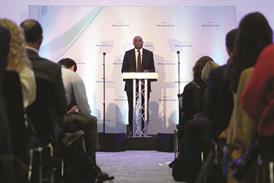
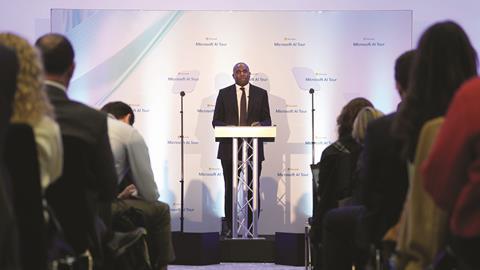
Lammy certainly seems unconcerned with courting lawyers’ support. Speaking to journalists at a Microsoft event at the Excel Centre on Tuesday, he berated the bar for sometimes being a ‘conservative profession with a small “c”’. He pointed out that the bar opposed changes to the double jeopardy rule – changes that delivered partial justice for Stephen Lawrence’s family.
But it is not just the bar Lammy will have to contend with. In their joint statement, the LCCSA, CLSA and CBA said they would be arranging a ‘day of action’ to protest against the proposals.
Lammy also faces a fight from backbench MPs. Labour’s Karl Turner, a former shadow justice minister, told the Gazette: ‘The MoJ modelling that has been provided is make-believe, but that’s no surprise because those of us that have fought for access to justice in parliament have learnt to be sceptical about modelling designed by a department determined to reduce costs beyond any other consideration.
‘It is noticeable that the MoJ say they intend to do an equality impact assessment once the legislation is in place. That is too little, too late and is bound to be tested by the High Court in judicial review.’
Turner has been working with the Law Society and Bar Council to find a compromise.
He said: ‘The lord chancellor would need to pause the threat to legislate and pilot Leveson’s proposals for 12 months in all six circuits, with one extra court centre in London. We have not yet agreed on the details of the proposal, but this will allow time before the government makes a fundamental mistake. If this cannot be agreed with the lord chancellor, we stand determined to oppose this wrongheaded legislation every step of the way.’
This article is now closed for comment.













15 Readers' comments