





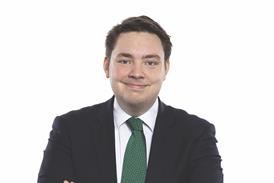















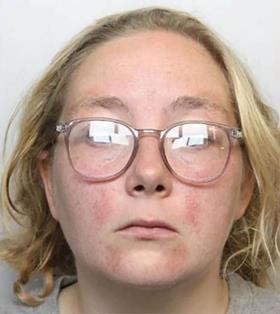
In September, it was announced that the attorney general had successfully brought a reference before the Court of Appeal Criminal Division to increase the sentence of Stacey Sharples (pictured) for 10 counts of acts tending and intended to pervert the course of public justice, after she had falsely accused 10 different men of rape, with the term of imprisonment increased from four years and six months to seven years.
Sharples’ case is arguably the second-highest-profile false case of allegations of rape and serious sexual offences (RASSO) to be prosecuted. The most infamous is perhaps Carl Beech. The series of allegations made by Beech led to Operation Midland, a two-year investigation by the Metropolitan Police in response to a series of false allegations of historical child sexual abuse made by Beech against several political and public figures. Beech was convicted in 2019 of 12 acts tending and intended to pervert the course of public justice. He received a term of imprisonment of 15 years for those offences.
In April 2023, the Crown Prosecution Service published comprehensive legal guidance addressing the circumstances in which a prosecution may be brought for making a false allegation of rape. It recognises that ‘prosecutions for these offences in the situations above will be extremely rare and by their very nature they will be complex and require sensitive handling’.
It is well known that both the profession and the public have deep concerns about the low conviction rate for RASSO allegations. To combat this and increase conviction rates, and trust and confidence in the justice system, on 21 September the government announced a decision to roll out specialist rape courts across England and Wales. However, part of society’s apprehension about convicting in RASSO cases is a concern that some allegations may be false. Indeed, the CPS seeks to address ‘rape myths and stereotypes’ at Annex A of the Rape and Sexual Offences Prosecution Guidance published in June. For the avoidance of doubt, there is a clear distinction between where a defendant may have a reasonable belief in consent that leads to a not guilty verdict (or a decision not to prosecute), and the far higher bar, and rarer occurrence, of an allegation being plainly false.
At first blush, a single instance of a prosecution for a series of false allegations of rape may not seem to mark much of an intention to increase prosecutions for demonstrably false allegations. However, the accompanying press release from the attorney general in respect of the Sharples case does provide practical insight into where the balance may lie, though questions remain as to whether or not they in fact strike a right, or fair, balance.
Emphasis was placed by the attorney general on the fact that suspects were arrested and held in custody. This undoubtedly causes a real risk to a person’s livelihood, access to their children on an ongoing basis and to their reputation. But the same is true without a person being held in custody, or even without the person being arrested.
The investigation into the allegations reported by Sharples took ‘550 hours’ to investigate. However, while that is undoubtedly an important public interest factor, even if an investigation concluded after five hours, an arrest could irreparably damage a person’s life. DNA and fingerprints are taken. The arrest would need to be disclosed for certain visa purposes. The Financial Conduct Authority’s (and likely other regulators’) expansionist approach may require the arrest to be reported to the person’s regulator. Put simply, the damage is done at the point of the allegation, not how long it takes an investigator to conclude the allegation was positively false.
The volume of people accused appears to be an important factor. While multiple people being accused would help build a prosecution case and demonstrate a pattern of offending, it should not be the only circumstance where a prosecution occurs. For example, it suggests that an accuser who falsely accuses one person may not face a prosecution, because it appears from the two high-profile examples that the volume of those who were accused was key in tipping the balance in favour of prosecution.
The press release from Greater Manchester Police in March fully describes the impact on each of the men’s lives in the case. Interestingly, each commented in the press release, and each clearly describes their utter turmoil and awful experience.
To increase conviction rates for RASSO cases, there needs to be clear action taken against those who make genuinely false allegations. If the public can see that those positively false allegations are investigated and prosecuted, this will go some way towards busting the myth and shifting the perception of society, and ultimately juries. But the rationale for prosecuting false allegations – which may well make up a tiny proportion of all allegations reported to the police – should not be confined to only exceptional cases involving multiple complainants, extensive police resources, or numerous allegations. It should instead focus on the deliberate making of a provably false accusation and the harm it causes.
Decisions to prosecute a false allegation should not be taken lightly, but consideration must be given to whether this may also be in the public interest, both for genuine victims of RASSO and those who are falsely accused of it.
Liam Lane is an associate at Peters & Peters, London








No comments yet