

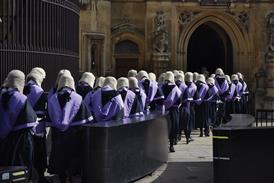











On 7 October, the Court of Appeal quashed the convictions of five former Barclays traders for rigging Libor and Euribor. Two days later, on 9 October, it quashed the conviction of former Deutsche Bank trader Christian Bittar. That same week, the attorney general opened the application process to appoint the next director of the Serious Fraud Office. Applicants will have those acquittals very much in mind when deciding whether to put their name forward for the top job.
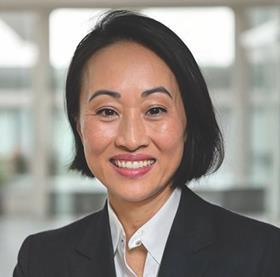
I have sat on both sides of this story: years defending traders caught up in the Libor and FX scandals, then a spell as a case controller at the SFO dealing with the fallout of that era. That gives me a dual perspective: an under-resourced institution struggling with imperfect tools, and traders standing alone against the combined weight of prosecutors, regulators and their own employers.
The SFO’s investigation into Libor and Euribor, opened in the wake of the 2008 financial crisis, produced nine convictions of individual traders: seven after jury trials, two by guilty plea. The unravelling began with Tom Hayes. On 23 July 2025, nearly a decade after his conviction, the Supreme Court quashed it, along with that of Carlo Palombo, a former Barclays trader. The court held that the trial judge had wrongly directed the jury that a rate submission was dishonest, as a matter of law, if the submitter had taken the bank’s commercial interests into account. It took the Supreme Court a decade to state the obvious: that was a question of fact for the jury. That same flawed direction had been used, and upheld on appeal, in every subsequent Libor and Euribor trial that followed Hayes.
The SFO opened these cases following the global financial crisis, when there was enormous public appetite to see individuals, not just institutions, held to account. Banks were settling civil and regulatory cases over Libor-, Euribor- and FX-rigging for billions of dollars. It was potentially expedient to treat the people who did the trading and the institutions that employed them as morally and legally equivalent.
This was not solely a British failure. The parallel investigations conducted by the US Department of Justice failed far earlier. Former colleagues of Bittar, Matthew Connolly and Gavin Black, were convicted in 2018 of wire fraud and conspiracy for the equivalent conduct in the UK of falsely adjusting Libor submissions. The Second Circuit Court of Appeals in New York unanimously reversed both convictions in 2022. The court’s reasoning struck at the heart of the prosecution’s theory. The government had argued that any submission influenced by the bank’s trading positions was, by definition, false. The Second Circuit rejected this, holding that the government failed to prove that Deutsche Bank could not have borrowed at the rates it submitted and absent that proof, a submission reflecting commercial considerations was not therefore false or misleading.
In 2017, the Southern District of New York failed to convict three British foreign exchange traders, Richard Usher, Rohan Ramchandani and Christopher Ashton, in the criminal case over the so-called ‘Cartel’ chatroom. The jury rejected the government’s claim that ordinary chat about trading positions amounted to a criminal price-fixing conspiracy. As a defence lawyer, I watched American juries and appellate courts reject, much earlier than their British counterparts, the theory that conduct widely practised across the industry could be recast as individual criminal fraud.
With the benefit of hindsight, how were these cases ever brought to trial? When I later worked at the SFO as a case controller, I saw an organisation genuinely skilled in certain respects, but its detectives – drawn from policing and tax enforcement backgrounds – were more comfortable chasing Ponzi fraudsters than sophisticated bankers. What it lacked was people who had actually worked in the City and understood market practice from the inside. There was an assumption that the SFO’s success in delivering huge fines from deferred prosecution agreements would translate naturally into the prosecution of individuals. It did not, because the two exercises are fundamentally different in kind, not just in scale.
The job advert for the next director calls for someone who will decide which cases to investigate and prosecute, and work closely with partners across law enforcement, government and international agencies. Given everything set out above, I would add three qualities that will be critical to the SFO’s future success.
First, genuine market expertise, embedded within case teams and not just at the top of the organisation. Second, serious investment in technology, including artificial intelligence, to manage disclosure. A director with no credible plan for handling disclosure at scale will struggle to get cases off the ground.
Third, new international partnerships that do not depend on the United States continuing to act as the world’s enforcer of white-collar crimes. With the current administration retreating from ambitious individual white-collar prosecutions that characterised the post-2008 era, the SFO cannot assume it will have a reliable transatlantic partner for its next landmark case.
There is a legitimate question about whether the SFO, or any prosecutor, should want to bring another Libor-scale case at all. I understand the appeal of the conclusion that it should not, but I would resist it. The answer to a decade of prosecutions built on an unsound legal theory is not to stop prosecuting serious market misconduct, but to prosecute it on a sounder footing through better expertise and technology, and a clear-eyed sense of where sharp practice ends and crime begins. The new director will inherit an organisation shaped by the Libor and FX years, for better or worse. Having watched this story from both sides, prosecuting and defending, my own view is simple: justice means getting the law right the first time, not spending the next decade correcting it.
Miranda Ching is a partner at Boutique Law, London, and a former case controller at the Serious Fraud Office









No comments yet