























Two years ago the politicisation of Mexico’s judiciary caused a storm at the International Bar Association. Joanna Goodman reports on what happened next

The low down
No government cherishes the prospect of losing in court. In 2024 the recourse of Mexico’s executive was to reform the judiciary. The prospect of direct elections to the bench, including the country’s Supreme Court, sent business confidence and the peso tumbling. Low voter turnout in judicial elections, and the victory of poorly qualified candidates seemed to confirm the worst fears of concerned observers. The judges’ lack of experience has shown in questionable rulings and delays. Business lawyers have responded by helping clients take their disputes private. Arbitrations are up, and even the government sees an economic opportunity here. Yet the infrastructure of the rule of law cannot be completely recreated in private.
Profound shock greeted Mexico’s judicial reforms in September 2024. The country was hosting the International Bar Association’s annual conference at the time, and delegates expressed open solidarity with Mexicans who feared the reforms were an assault on the rule of law and the independence of the judiciary.
The controversial changes replaced a career-based model for appointing judges, ushering in direct elections for all federal judges – Supreme Court justices, circuit magistrates and district judges. It replaced the Federal Judiciary Council (Consejo de la Judicatura Federal) with a Judicial Administration Body and a Judicial Discipline Tribunal. The Supreme Court was reduced from 11 to nine justices and restructured.
Low turnout
On 1 June 2025, about 13 million Mexicans voted in the first of two judicial elections, covering half of the country’s judicial posts, and all of the Supreme Court. Turnout was about 13%, compared to 60% in the 2024 presidential and legislative elections. The process drew criticism, notably regarding the huge numbers of candidates and the complex election process that contributed to the low turnout, and circulation of voting guides (acordeones) that directed voters towards specific candidates, most of whom were subsequently elected. The first elected judges took office on 1 September 2025. The judicial elections covered half of the judiciary, with the remaining posts affected to be elected in 2028 (pushed back from 2027).
Juan Carlos Machorro, a partner at Santamarina + Steta, Mexico City, explains that this historic decision was politically motivated. Mexico is only the second country after Bolivia to elect supreme court justices and the first to introduce direct elections for every judicial position.
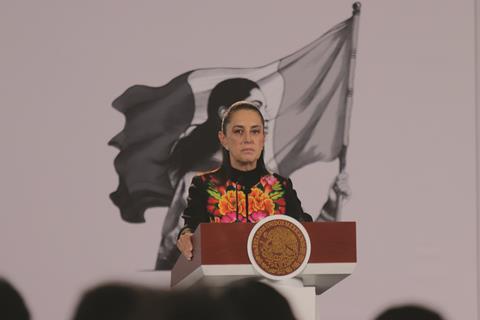
Mexico is a federal republic and president Claudia Sheinbaum is a representative of Morena, the political party founded by former president Andrés López Obrador. It was López Obrador who originally proposed the judicial reforms, introduced three months after Sheinbaum was elected. It is also worth noting that while the presidency is limited to one six-year term, Mexican judges hold lifetime appointments.
The stated aims of the judicial reforms were to tackle corruption and nepotism associated with the previous system, and improve transparency, accountability and access to justice.
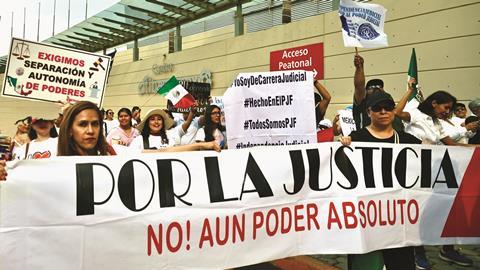
However, critics allege that the new system risks weakening judicial independence and the separation of powers, particularly as the new Judicial Discipline Tribunal has extensive powers to address ‘judicial misconduct’. Making the reform constitutional rather than statutory also constrained the judiciary’s ability to challenge the new arrangements. A further decree, in October 2025, placed new limitations on amparo writs, a Mexican constitutional mechanism through which individuals and companies challenge violations of constitutional rights.
Immediate impact
The practical effects were immediate. Although statistics differ depending on their source, indications are that the new Supreme Court has resolved approximately 20% fewer cases than its predecessor. This is partly because experienced judges have been replaced by elected judges who may not have relevant skills and experience.
Only three of Mexico’s nine elected Supreme Court justices have prior judicial or high court experience. The rest have non-judicial backgrounds in public administration, legal practice and legal academia.
Further down the hierarchy the situation is worse. Eileen Matus, chief executive of Reg(X), which studies the impact of digital transformation and artificial intelligence on regulatory dynamics and governance, references a Global Arbitration Review study on judges elected in Mexico City. This found that of 95 new appellate magistrates only one had previous experience as a federal judge. She explains that these judges preside over the courts that will hear the amparo that follow almost every enforcement.
Questions have been raised about judges’ technical competence and political motivation, which have affected predictability of outcomes and business confidence. This uncertainty has led to fewer cases being brought to the Mexican courts and businesses turning to alternative dispute resolution (ADR). Omar Guerrero, managing partner of Hogan Lovells Cadwalader, Mexico City, believes that it is too early to say ‘whether such a trend impacted the number and quality of cases decided in arbitration’, given that ‘the newly elected judges are handling high-profile matters, notably the reorganisation proceedings of TV Azteca, one of Mexico’s most influential TV broadcast stations’.
Matus is more concerned about the direction of outcomes. ‘A court that used to be divided and argumentative now speaks with one voice – and that voice rarely contradicts the government,’ she says.
Guerrero too has seen some evidence of this: ‘There have been mixed results in outcomes. While there have been some good judgments issued by elected judges and magistrates, there have also been judgments that fail to properly address the matter or have [been] questioned from the legality standpoint. The Federal Supreme Court provides some examples as to how difficult it has become trying cases against the government.’ Matus offers a similar perspective, observing: ‘The Supreme Court has been tamed by the executive and adjusts its answers so as not to contradict it… there are district judges and magistrates who dared to confront the government, and they are being punished for it.’
The Mexican government responded to these and other concerns in its constitutional decree of 2 June this year. This barred judicial candidates who had participated in political elections or held party political positions, and introduced a mandatory certification process for all judicial candidates. It postponed the next judicial elections from 2027 to 2028, to the same date as a possible presidential election. The decree also partially reversed one of the 2024 reforms by creating two sections within the Supreme Court, restoring the functional flexibility that the original reforms had eliminated.
Judge interrupted
Daniela Patiño spent 11 years working in Mexico’s judicial system and was close to qualifying as a judge when the reforms stopped her career trajectory in its tracks.
Patiño joined the Mexican employment law boutique Yllanes Ramos as a senior associate, specialising in administrative and constitutional litigation and social security. She worked as a lawyer in the federal courts, analysing cases and drafting judicial decisions.
‘I was no longer aligned with the direction of the new judicial system in Mexico, and I felt I could contribute more and continue growing professionally in private practice,’ she says.
While she approves of the constitutional decree of June 2026 that established a commission to verify candidates’ eligibility and suitability as judges, and restored mandatory professional examinations, she still has reservations about the new system. ‘My central concern remains how to protect the independence of those who adjudicate, especially when a case is brought against the state,’ she says.
Patiño’s knowledge of court processes and procedures is directly relevant to Yllanes Ramos, which represents multinational companies operating in Mexico.
Consulting partner Fernando Yllanes Almanza of Yllanes Ramos explains that Mexico’s courts depend on the professionals and officials who draft and administer the rulings: ‘Many people who previously held these important positions are looking for alternative opportunities, and that is to the detriment of the courts and the Mexican people.
‘Those who remain [working for the judiciary] are supporting the system, because they need to explain courtroom procedures to [elected] judges who do not necessarily have credible experience or credentials.’
While Patiño does not plan to revive her own judicial aspirations, she expresses ‘hope that future changes to the reform will restore the judicial career system in Mexico.’
Navigating uncertainty
Lawyers have had to adapt to this new era of uncertainty. Machorro, who is a transactional lawyer, has been advising corporate clients to build in options for ADR including arbitration ‘at the inception of the contractual relationship… particularly for contractual relationships that involve economic considerations’. Furthermore, ‘we have been urging our clients to revisit their contractual relationships to see where it makes sense, even without a [dispute] having arisen, to build in an arbitration clause’.
However, anyone with a case against the Mexican government, either as a contractor or licence holder, or even as a taxpayer, has to go through the Mexican courts. So far, Machorro, whose firm has a tax litigation practice, has not seen any shift in judicial decisions in tax cases.
He says: ‘We are still able to obtain judicial resolutions that favour our clients, even against the federal government, so there is no sign of governmental bias in the courts.’ He notes too that although the judges are now elected, court officers and officials are by and large the same.
Guerrero agrees: ‘The consistent topic across firms advising on Mexican exposure since the 2024 constitutional reform is a shift away from the Mexican court system and towards arbitration and ADR to avoid court litigation. Likewise, there is a trend to analyse new corporate structures to have access to the protection of Mexico’s bilateral and multilateral investment treaties.’
Treaty protections
As Guerrero explains, Mexico’s statutory arbitration enforcement framework has not changed: ‘The Commercial Code provisions implementing the [United Nations Commission on International Trade Law] Model Law and the 1958 New York Convention remain intact, and Mexico’s pro-arbitration judicial precedents have not been reversed. What has changed is the operational environment in which those provisions are applied: newly elected judges need to acquire experience on these topics.’
He adds: ‘English judgments and London-seated awards have not faced a specific reform. The practical risk for… any foreign instrument is the same: in certain cases, having a less experienced judge handling the recognition and enforcement petition, and [delay due to] caseloads depending on the court processing the case.’
Matus sees a sharp increase in cross-border arbitration and a shift to foreign seats: ‘Some Mexican advisers have written publicly that they are receiving more requests to draft International Chamber of Commerce arbitration clauses with neutral seats such as Paris or Geneva.’
'Companies have fewer domestic tools to defend themselves against the state, and that naturally pushes them towards international protection'
Eileen Matus, Reg(X)
She adds: ‘The choice of seat matters more than ever. If the seat is Mexico City, any annulment action goes before Mexican judges. If it is London, New York or Paris, the Mexican courts only see the award at the recognition and enforcement stage, where the grounds for refusal are the narrow ones of the 1958 New York Convention on the Recognition and Enforcement of Foreign Arbitral Awards.’
International investors need to think about treaty protections much earlier, says Matus. She cites an analysis published by Jones Day in July that advises investors to check whether their Mexican assets qualify for protection under an applicable investment treaty, because an investment that is restructured after a dispute is foreseeable will not be protected.
The amparo limitations are another factor, explains Matus. ‘In practice, this means companies have fewer domestic tools to defend themselves against the state, and that naturally pushes them towards international protection. Add to that the uncertainty over the United States-Mexico-Canada Agreement (USMCA) which the United States declined to renew… Many clients who relied on the USMCA are now looking at bilateral treaties as a backup.’
While the bilateral investment treaty between the United Kingdom and Mexico links fair and equitable treatment to the customary minimum standard, which sets a very high bar for a denial-of-justice claim, the treaty with the Netherlands has a stand-alone clause that may be more generous.
International standing
As Machorro observes, while it is hard to establish whether the judicial reforms have had a negative impact on investment in Mexico, concerns have been expressed by the legal and business community in Mexico and internationally.
When the judicial reforms were announced, investor confidence fell dramatically as rating agencies and global financial institutions criticised the reforms, with Bank of America suggesting that they could impact the currency and the country’s economic growth.
Indeed, following the announcement of the reforms in February 2024, the Mexican peso depreciated sharply against the US dollar, although it subsequently recovered. This and the fact that foreign direct investment improved significantly in 2025 suggests that the perceived risk may have been overestimated.
The fallout continues, however. Mexico’s judicial reforms cost the National Commission of Superior Courts of Justice of the United Mexican States (CONATRIB) its seat in a leading international judicial forum. On 17 October, the International Association of Judges (IAJ), which covers 93 countries, voted by a wide majority to expel CONATRIB for failing to meet its international standards in relation to judicial and institutional independence and non-partisanship. This reflects legal industry concerns, including from the Mexican Bar Association and the International Bar Association, as well as comments from UN Special Rapporteur on the independence of judges and lawyers, Margaret Satterthwaite.
It has also been suggested that CONATRIB’s exclusion potentially strengthens Mexico’s National Association of Circuit Magistrates and District Judges of the Federal Judiciary, which has consistently maintained a critical stance on the reforms.
Strategic lawyering
Christian Zinser is a principal at Baker McKenzie, Mexico City, who previously ran his own litigation boutique. He observes that since the judicial reforms case outcomes have become less predictable, matters which would previously have gone to court require more strategic lawyering.
‘Previously you could reasonably calculate your chances of winning a case,’ he says. ‘Now, you can’t be sure that the [new] judiciary is going to continue along the same route as the previous one.’
Like other lawyers in Mexico, Zinser is advising his corporate clients to consider arbitration, but only in the right conditions. ‘Not everything can be taken to arbitration because of the cost. The judiciary in Mexico is free, so [litigation] is a matter of appointing lawyers and going to court. If [clients] move to arbitration, they have to pay arbitration fees,’ he explains. ‘If it’s a one-off, bet-the-company problem and cost is not an issue, arbitration may be the best option, but if it involves hundreds of supplier contracts, arbitration clauses can be very expensive.’
However, he still recommends this: ‘Although arbitration isn’t fast and is expensive, and you will end up in court if the parties don’t comply with the award, it is still preferable because arbitrators have much less work to do than judges, and in most cases they are specialised in the specific matter under arbitration.’
'As lawyers in Mexico, we were taught to live off the conflict, and now we have to live off the solution. So rather than saying we will win in court, we have to find the most efficient and business-like solution'
Christian Zinser, Baker McKenzie, Mexico City
With fewer cases reaching the courts, ‘lawyers are more important than ever… to help their clients navigate the [new judicial] system’ says Zinser, who takes a pragmatic approach. ‘This is what we have to deal with now, so we have to take the necessary actions to make the system work, and in time there will be corrections.’
Zinser identifies judicial competence and experience as a key challenge: ‘One of the most pernicious elements of the reform was to take away the judicial career. The logic behind the decision was that the judicial career system was corrupt, but the solution was to implement checks and balances, not to take away the judicial career.’
Previously, Zinser says, ‘we had judges that had been in the judiciary for their whole careers, so they knew what to do. Now we have thousands of cases and new judges [who are unfamiliar with administering them]. So a case that may have taken five days previously is now taking three months’.
The combination of delays and uncertainty means that lawyers are looking first to ADR for corporate and commercial cases, and clients are looking for strategic lawyering.
‘As lawyers in Mexico, we were taught to live off the conflict, and now we have to live off the solution,’ says Zinser. ‘So rather than saying we will win in court, we have to find the most efficient and business-like solution that will benefit our clients.’
The uncertainty that is keeping disputes out of the courts is producing new advocacy opportunities.
‘In the new environment, law firms specialised in dispute resolution have become allies for international clients looking to do business in Mexico,’ observes Guerrero. ‘Litigators, too, face a new paradigm: they need mastery of oral advocacy, and new tools and methods to present their arguments effectively, all to translate this complex new environment into effective strategies for clients. We have also seen clients adopt a more preventive approach to risk recognition, which has resulted in increased requests for political, legal, compliance, and regulatory risk analysis, as well as an increase in requests for inserting in contracts more ADR [clauses], or seeking in certain transactions the possibility that the law and the seat of arbitration are foreign.’

Fernando Yllanes Almanza, a consulting partner at employment boutique Yllanes Ramos, is optimistic that further adjustments to the judicial reforms will improve Mexico’s justice system and commercial dispute resolution. ‘It is an evolving system,’ he observes.
Indeed on 6 October, the four bodies of Mexico’s federal judiciary submitted further proposals to improve its operations. These include improving coordination between judicial institutions, increasing autonomy over budgets and administration, streamlining Supreme Court proceedings, strengthening judicial disciplinary investigations, and adjusting judicial election procedures related to candidate evaluation and gender parity.
Sheinbaum endorsed the proposals, which are awaiting legislative approval. Yllanes also references initiatives by local and international arbitration organisations to promote Mexico as an international commercial arbitration seat.
These include Mexico Arbitration Week in 2025, establishing specialised arbitration courts in Yucatán and potential plans for an arbitration hearing centre and professional training programme in Cancún. However, it is unclear whether these initiatives have reversed the shift towards foreign arbitration seats.
For Guerrero, it is ‘too early to say whether arbitration has become a close substitute for the courts, but for now it’s not. The main question is whether we have legal certainty that if we have a conflict in Mexico, it’s going to be adjudicated fairly, and if we have a fair judgment, it’s going to be speedily enforced. Those are the questions we need to address for our clients’.
Also, there are important decisions ahead about the future structure and standing of Mexico’s legal system. ‘I still trust the Mexican legal system,’ Guerrero says, ‘but if we do not make the proper changes in the near future, especially for the 2028 elections, I believe we are going to suffer. That’s why we recommend alternative dispute resolution or arbitration in more complex cases.’
Joanna Goodman is a freelance journalist








No comments yet